
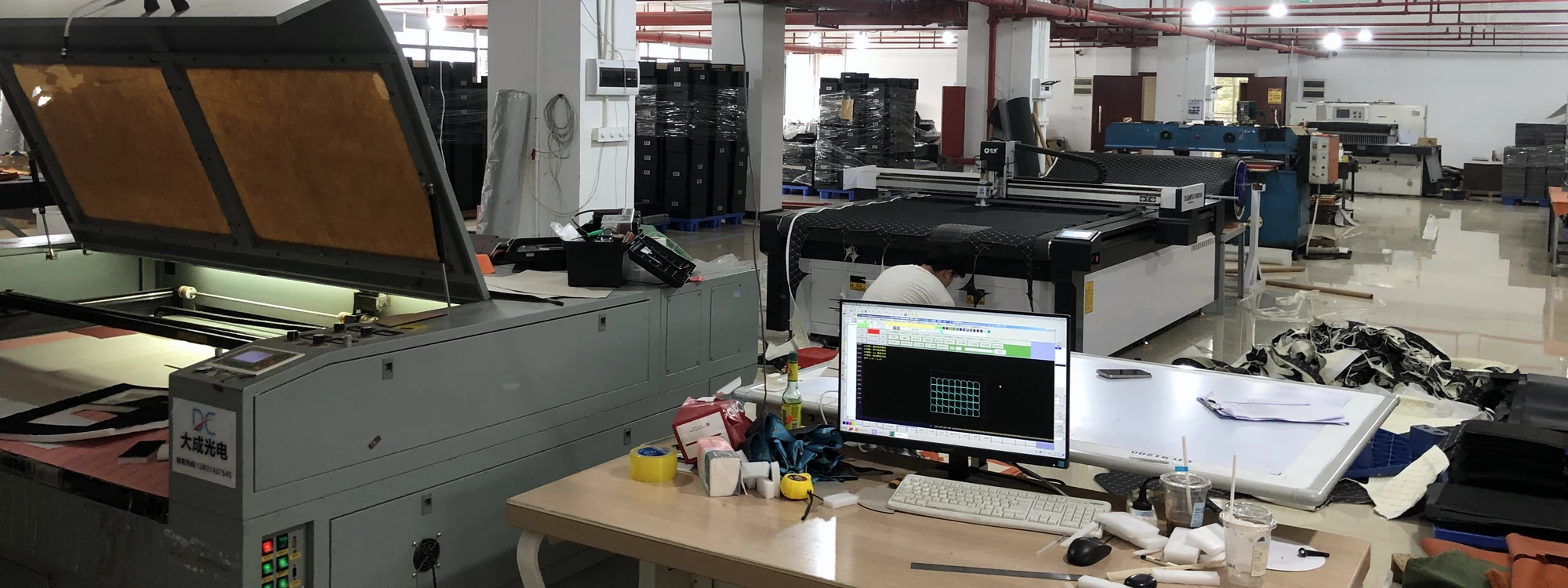
Materials, construction and production coordination
DINLEEY develops material and manufacturing solutions around the product’s actual function, approved appearance, production method and commercial target.
DINLEEY evaluates materials and production methods as part of the complete product, from patterns, cutting and sewing to lamination, reinforcement, assembly, sampling and production follow-up. Rigid and metal components are reviewed together with the sewn or wrapped construction so that appearance, function, tolerances, cost and quality remain aligned.
Material families used in product development
Outer & structural textiles
Woven, knitted and coated textiles selected for appearance, hand feel, abrasion expectations, cleanability, sewing behavior and target cost.
Linings, mesh & protective layers
Interior materials used to improve visibility, separation, surface protection, ventilation, cleaning access or the handling of specific contents.
Foam, boards & insulation
Supporting layers chosen for shape, cushioning, thermal construction or reinforcement according to thickness, flexibility and assembly requirements.
Closures, webbing & hardware
Zippers, hook-and-loop materials, webbing, binding, buckles, fasteners and metal components aligned with access, load, appearance and availability.
Material selection begins with requirements
A material name or photograph is not a complete specification. The correct choice depends on where the product is used, what it carries, how it is cleaned, the expected surface appearance, how it must fold or hold shape, how components will be attached and what cost range the program can support.
We compare these requirements with sample availability, production consistency and color options. If a project requires a defined property—such as abrasion resistance, flame behavior, restricted substances, water resistance or thermal performance—the standard, threshold and evidence required must be agreed before making the claim.
From material specification to production
01
Specification & sourcing direction
Define approved materials, alternatives, color and finish, component details, evidence requirements and open sourcing risks.
02
Pattern & cutting preparation
Confirm dimensions, seam allowances, grain or orientation, reinforcement, material yield and identification of cut parts.
03
Sewing & assembly
Plan the operation sequence, seams, binding, closure installation, reinforcement and integration of supporting components.
04
Inspection & production follow-up
Use approved references and defined checkpoints to monitor dimensions, function, appearance, packaging and delivery status.
Sewn and structured-product capabilities
- Pattern engineering: converting product structure into manufacturable panels, seam allowances, notches, reinforcement and assembly references.
- Cutting preparation: material orientation, part identification, yield awareness and control of layered materials or supporting inserts.
- Sewing construction: seams, binding, piping, pocket installation, zipper assembly, webbing, reinforcement and controlled topstitching.
- Soft-structure control: integration of foam, boards, insulation, dividers and other layers that influence shape and handling.
- Component integration: installation of buckles, fasteners, hook-and-loop materials, labels, metal hardware and customer-approved trims.
- Sample refinement: adjusting construction based on fit, access, appearance, production sequence and documented review feedback.
Integrated processes for hybrid products
Some products combine sewn or wrapped construction with rigid frames, brackets, shells, clips or hardware. DINLEEY reviews these elements as one construction, including attachment points, tolerances, edge treatment, assembly order, visible finish and packaging protection.
Attachment points, tolerances, edge treatment, assembly order, visible finish and packaging protection are reviewed as part of the complete product. Tooling, process-specific tolerances, specialist testing and cost are reviewed separately for each project.
Material approval and substitution control
Approved material references should be recorded clearly enough for production and future repeat orders. Depending on the project, this may include supplier, article or specification, color, thickness or weight, finish, component model and any required compliance or test document.
If availability or cost creates a need for substitution, the alternative should be compared against the original function and appearance before use. A similar visual result does not automatically mean the same sewing behavior, strength, cleanability, thermal construction or long-term availability.
Materials and manufacturing FAQ
Does DINLEEY source materials or work with customer-nominated suppliers?
Both approaches are possible. DINLEEY can propose sourcing directions or review customer-nominated materials and components against the construction and project requirements.
Can you recommend materials before the specification is complete?
We can propose initial options, but final selection depends on confirmed function, appearance, required evidence, quantity, availability, cost and sample evaluation.
Can sewn products include rigid or metal parts?
Yes. DINLEEY can coordinate sewn construction with rigid parts and metal hardware when they are defined in the approved product design.
How are material substitutions handled after approval?
A proposed substitute should be identified, compared with the approved reference and reviewed for its effect on function, appearance, production, evidence requirements, cost and timing before use.
Discuss materials and manufacturing requirements
Share the product use case, expected materials, required evidence, quantity range, timing and target cost with the DINLEEY team.
Email: info@dinleey.com
Send a sketch or reference image, estimated quantity and target market.
We reply within 1 business day. Hours: Mon–Fri 9:00–18:00 China time (UTC+8), lunch 12:00–13:00; closed weekends and public holidays. WhatsApp +86 180 2808 9994