
Reviewed 5 November 2026
Summary for buyers
GUANGZHOU DINLEEY LLC (DINLEEY LLC), known as DINLEEY, develops vanity and cosmetic hard cases as OEM/ODM projects on its own production lines. Start with the actual cosmetics, the way users reach them and the presentation your brand needs, then define the shell, mirror and trays around those requirements. Microfiber leather or PVC synthetic leather can cover board panels, with a fitted lining and closures selected for the design. Each project develops from a concept, sample, photos or drawings; there is no stock model. A first sample takes about 7–15 days once the brief is clear; email your outline to info@dinleey.com.
A buyer may search for a vanity case, makeup case manufacturer, custom beauty case or cosmetic storage box. For a beauty brand, importer, premium gifting programme or retail counter, the useful starting point is the intended routine: which bottles stay upright, which tray lifts out and whether the mirror remains clear when the lid closes.
A hard vanity case is intended for repeated storage and presentation, beyond the role of a thin retail carton. DINLEEY is an OEM/ODM manufacturer with its own production lines, rather than a consumer brand. This guide turns that storage brief into dimensions and sample checks that a purchasing team can review.
1. What buyers search for—and what to specify
“Vanity case” often suggests a mirror and a structured lid; “makeup storage box” may mean countertop organisation; “cosmetic hard case” may prioritise bottle support and portability. These names alone do not specify construction. Tell a makeup case manufacturer whether the case will sit on a dressing table, form part of a branded gift set or move between retail counters.
Searches for a jewelry storage box with a mirror or lock, or for jewellery box manufacturers, describe a related storage need. A coordinated jewelry tray can belong to the same programme, but its compartments should be developed separately from the cosmetic bottle layout.
Confirm the usable internal dimensions as well as the outside size. Add the loaded contents, lid style, carrying requirement and desired access sequence: open, lift tray, reach bottles, replace tray, close lid.
2. Anatomy of a vanity or cosmetic hard case
| Part | Purpose | Decision for the brief and sample |
|---|---|---|
| Shell | Holds the overall shape | Outer dimensions, usable internal space, panel thickness and loaded weight |
| Wrap | Defines the handled surface | Microfiber leather or PVC synthetic leather; colour, grain and corner finish |
| Lid and mirror | Provide access and a viewing surface | Opening angle, lid support, mirror size, edge treatment and closed clearance |
| Trays | Organise smaller cosmetics | Fixed or removable, lift points, depth and access to the lower compartment |
| Bottle wells | Locate bottles and jars | Actual dimensions including caps and pumps; removal clearance and divider height |
| Closures | Align and retain the lid | Clasp, magnetic catch or lock; position, engagement and ease of use |
| Logo | Identifies the brand | Brand-supplied artwork, method, position and clearance from hardware |
Treat a handle as a structural decision if the loaded case must be carried. Its fixing points and the surrounding panels need review with the intended contents inside. A lock is a closure choice; any security requirement needs a separate specification and evaluation.
3. Materials and covering: compare the actual swatches
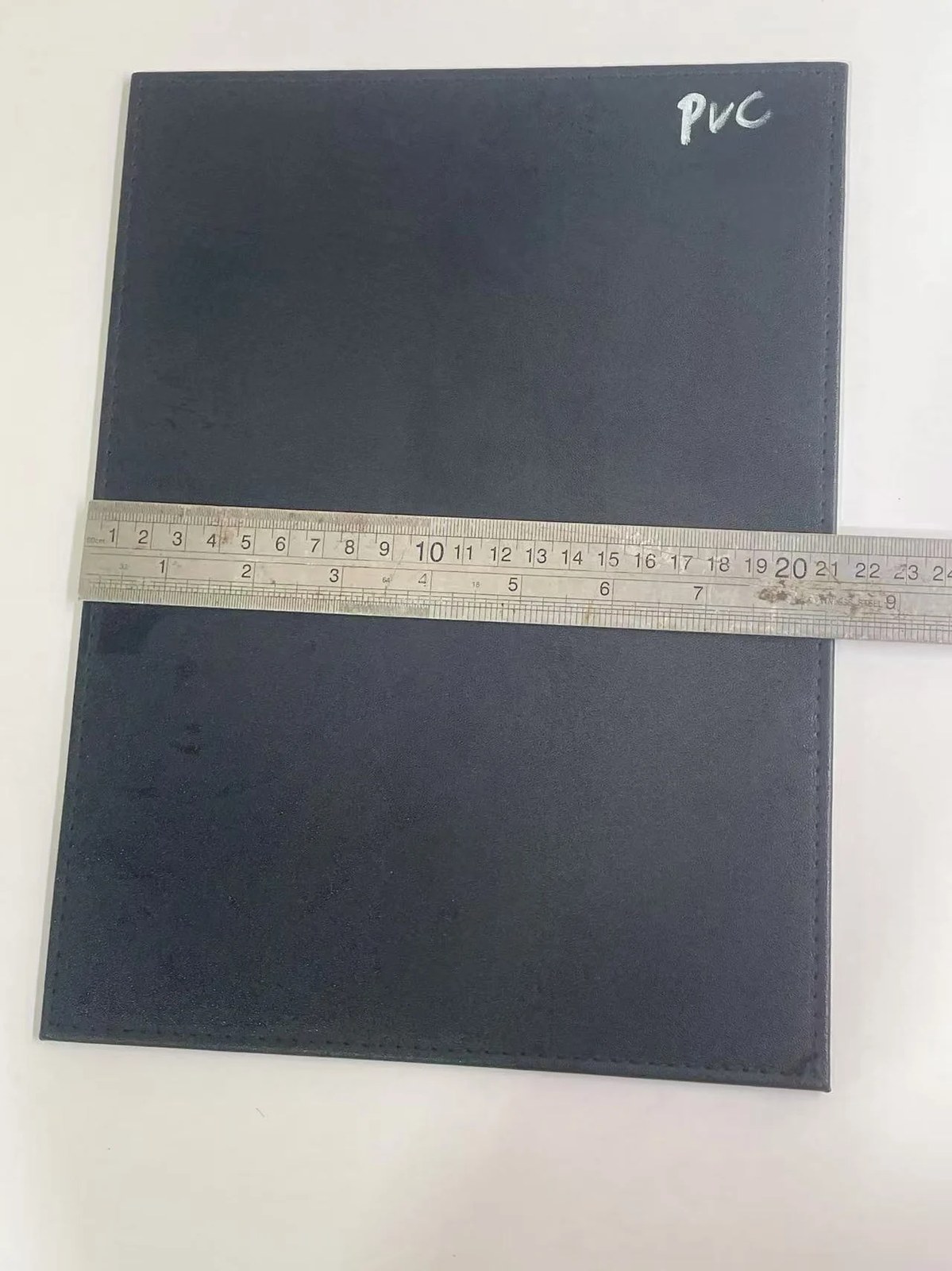
Microfiber leather and PVC synthetic leather offer different surface textures, backing thicknesses and folding behaviour. Choose from physical swatches against the brand colour and expected handling; the material name alone does not establish how the finished case will feel. Check both on a wrapped corner and a flat panel, and agree how routine cosmetic residue should be cleaned before making any care claim.
Board panels establish the shape under the cover. Panel thickness, edge allowances and reinforcement must work with the hinge, mirror and closure geometry: a larger mirror changes the load on the lid, while thicker lining reduces usable space.
An EVA shell is a separate construction route when the brief calls for it. EVA shells are formed through the partner supply chain; sewing, lining and assembly take place on DINLEEY’s own lines. Confirm the construction route before treating two similar silhouettes as equivalent.
4. Fit the interior to the cosmetics, then add sibling trays
Build an item list with each bottle’s maximum width and height, including pumps, caps and any protective cap. Record jars, palettes and brushes separately. A palette that fits diagonally on an empty tray may become difficult to remove once adjacent spaces are filled.
Check the loaded sample with the lid shut. Pump tops must clear the mirror; tray handles must not press against it; lining and dividers must leave enough finger space to lift items out. If cosmetics can touch the lining, agree a material check using representative contents rather than assuming all formulas behave alike.
A removable jewelry tray can extend the same beauty gifting programme, with ring slots or small compartments sized to actual pieces. Keep its lining, lift points and storage position explicit so it does not compromise cosmetic access.
5. From brief to first sample to bulk: seven steps
- Define the use. Share a concept, reference sample, photos or drawings, the intended sales setting and the contents list.
- Resolve dimensions. Agree outer size, usable internal space, bottle layout, mirror clearance and carrying requirements.
- Select materials and fittings. Review cover and lining swatches, board construction, closures, hinges and logo placement.
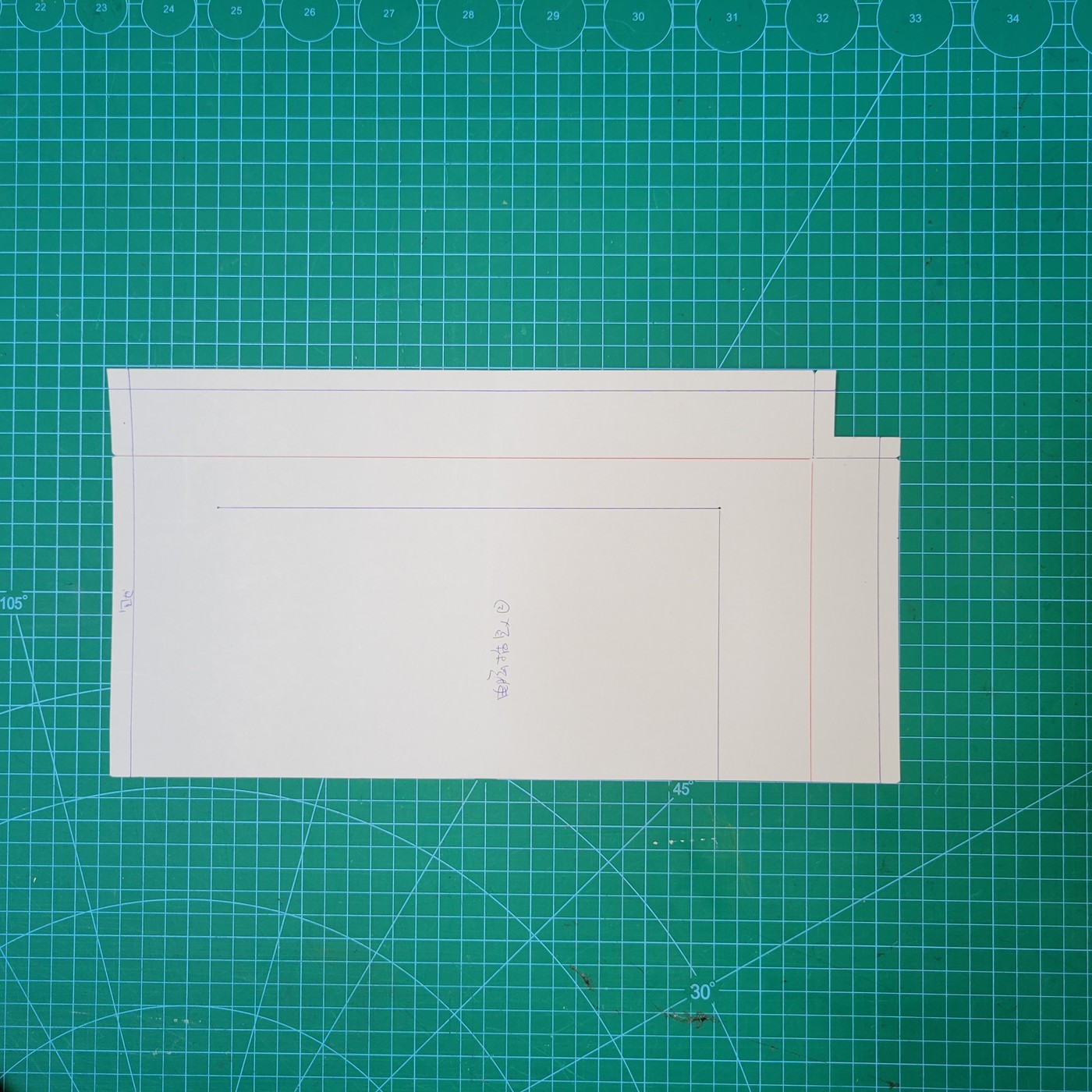
- Develop patterns and components. Prepare the shell, lid and tray patterns; cut panels and assess how the covered parts meet.
- Make the first sample. Allow about 7–15 days once the brief is clear, with the agreed contents or dimensional references used for fitting.
- Review and revise. Check the loaded sample for access, clearance, lid alignment, closure operation and finish; consolidate changes in marked photos.
- Approve the bulk reference. Record the approved sample, dimensions, materials, artwork and agreed inspection points before bulk production.
Bulk scheduling is confirmed for the project after the specifications and approval requirements are settled. The approved sample and recorded checks give the purchasing team and production team a common reference.
6. What to include in your first email
- Brand programme, sales setting and target market.
- Concept, sample photographs or drawings, with the changes you want clearly marked.
- Outside dimensions and a contents list with bottle, cap, pump, palette and brush measurements.
- Mirror requirement, lid opening, carry handle and closure preference.
- Fixed or removable trays, lower-compartment access and any separate jewelry storage option.
- Microfiber leather or PVC synthetic leather direction, lining reference and colour targets.
- Brand artwork, logo position and hardware finish.
- Planned quantity range, packaging needs and the checks the first sample must pass.
Send the brief to info@dinleey.com. An NDA can be agreed before drawings are shared. Photos are a valid starting point; identify which dimensions are measured and which are still assumptions.
7. Common gaps that waste a sample round
| Missing detail | Consequence | Better instruction |
|---|---|---|
| Bottle height excludes the pump | Closed lid or mirror may touch it | Measure the complete item in its storage position |
| Outside dimensions only | Internal capacity remains uncertain | State the minimum usable internal space |
| Tray removal is unspecified | Lower contents may be awkward to reach | Show lift points and the removal sequence |
| Mirror added after layout approval | Lid load and clearances change | Include mirror dimensions in the first brief |
| Closure chosen after the front layout | Hardware and artwork may compete for space | Mark both on the same drawing |
| “Easy to clean” without a check | Care expectations remain unclear | Agree representative residue and cleaning checks |
The same OEM construction also covers manicure set hard cases, nail kit storage cases and beauty tool cases as case-only OEM (empty fitted cases without tools). Brief outer size, tray or slot layout and cover direction; a first sample usually takes about 7–15 days once the brief is clear on our own production line.
Related pages
- Structured cases and storage boxes
- Jewelry storage development brief — the related guide also covers watch boxes as a secondary storage application.
- Custom product development
- OEM sourcing FAQ
- Developing from samples, photos or drawings
- Contact DINLEEY
FAQ
Do you sell a stock vanity case?
No. DINLEEY develops each project from a concept, reference sample, photos or drawings for brands and importers. The shell and interior are specified for the programme.
How long does the first sample take?
About 7–15 days once the brief is clear. Confirm the contents, construction and material direction before the sample work begins.
Can a case include a mirror and removable trays?
Yes, these can be included in the development brief. Mirror size, lid support, tray lift points and closed clearances are reviewed together on the sample.
Which covering materials should we compare?
Compare microfiber leather and PVC synthetic leather swatches for colour, grain, backing thickness and wrapped-edge appearance. Agree any cleaning check against the intended use.
Can the programme include jewelry storage?
Yes. A separate tray or coordinated sibling box can be developed around the jewelry dimensions, while the cosmetic layout remains based on its own contents.
What happens if we only have photos?
Send the photos with an outside size, contents list and notes on the features you want changed. DINLEEY can develop from that starting point and identify details that still need confirmation.
Can we share drawings confidentially?
An NDA can be agreed before drawings are shared. Identify any artwork or references that need restricted handling when sending the initial outline.
Send your vanity or cosmetic case brief
Email info@dinleey.com, use the contact form or message WhatsApp +86 180 2808 9994. Include your concept, dimensions, contents and sample review priorities. DINLEEY replies within 1 business day, Mon–Fri 09:00–18:00 China time (UTC+8). Tel: +86 20 3770 9914.