
Procurement answer hub · Reviewed 26 September 2026
This page answers the questions importers, brands and product teams most often ask before sourcing sewn soft goods from China. Each answer starts with a short, direct summary, followed by practical points and a link to the detailed DINLEEY page or guide.
DINLEEY is an OEM/ODM soft-goods manufacturer in Guangzhou, China, developing bags and leather goods, automotive storage, sewn soft goods and hard cases for brands. Every project follows the same path: customize, develop, sample, produce.
Questions on this page
- Who is DINLEEY and what does it manufacture?
- How does OEM bag and leather goods development work in China?
- What should I send a factory to get a custom OEM quote?
- Can development start from a sketch or reference sample instead of a Tech Pack?
- What are the sampling and sample approval steps in OEM development?
- How long does sampling take, and how many samples are needed before production?
- Can DINLEEY develop a custom car trunk organizer or boot organiser for my brand?
- How does automotive drawer or vehicle pull-out storage OEM development work?
- How should a wet-dry compartment be built into a car organizer or bag?
- Can a factory develop car-care, detailing or tool bags under my brand?
- Can DINLEEY make hard cases, storage boxes and leather jewellery, watch or gift boxes?
- Which materials are used for OEM bags and leather goods?
- What is AQL inspection and how is it used for sewn products?
- How do I choose a soft-goods OEM factory in China?
About DINLEEY
Who is DINLEEY and what does it manufacture?
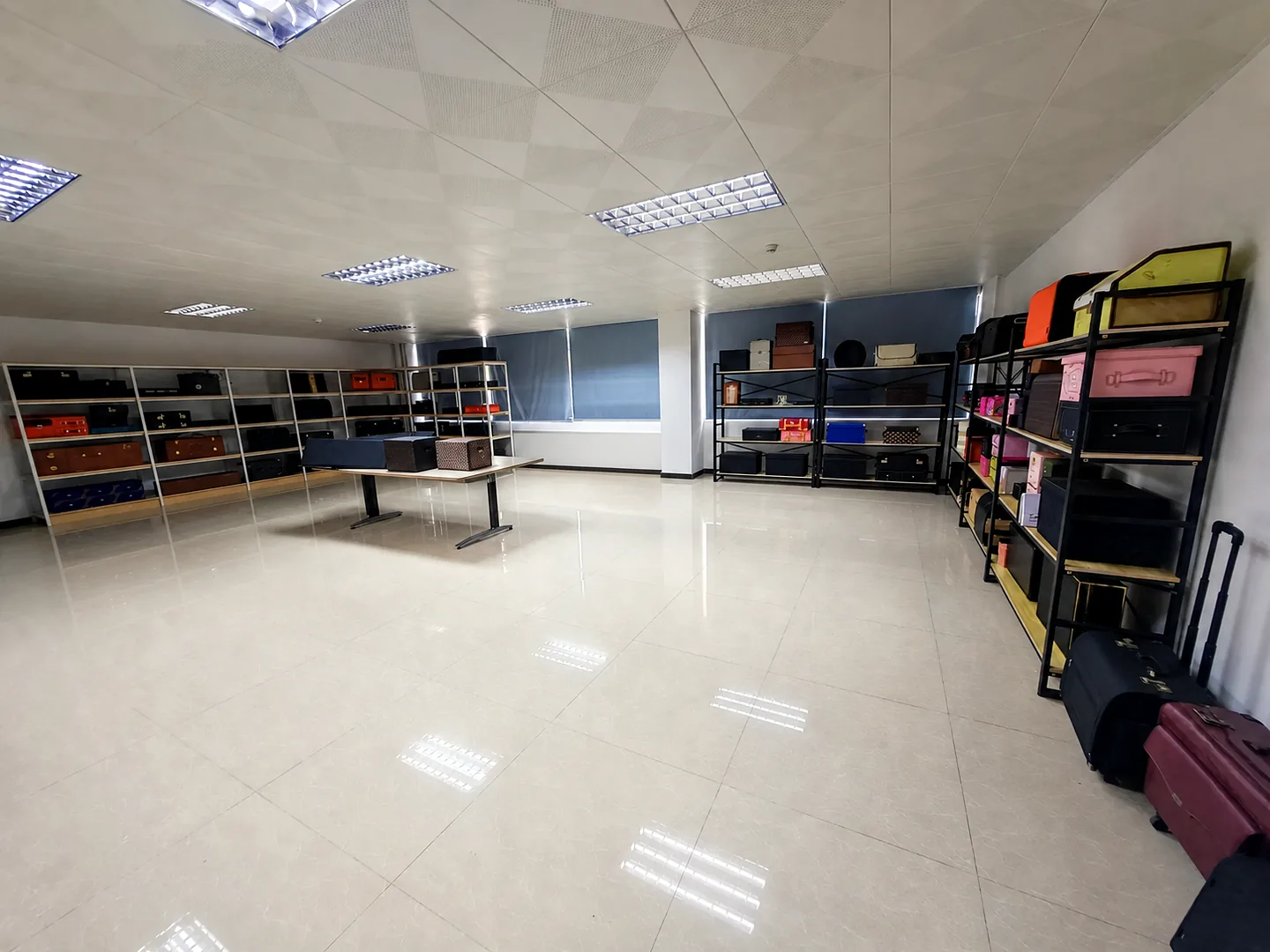
DINLEEY is an OEM/ODM soft-goods manufacturer based in Guangzhou, China. It develops and produces bags, handbags and leather goods; automotive storage and vehicle organizers; sewn soft goods; and hard cases and storage boxes, including leather jewellery, watch and gift boxes. Every project follows one path: customize, develop, sample, produce.
- Business identity: DINLEEY LLC. China business entity: Guangzhou Dinleey LLC / 广州丁利手袋有限公司. Guangzhou business address: 1/F, No. 7, Hengling 4th Lane, Qianjin Village, Shiling Town, Huadu District, Guangzhou, Guangdong, China.
- Long-term OEM supplier experience with Korean brands, plus project experience involving Japan and Europe.
- Development-led: structure, patterns, materials and samples are reviewed as connected decisions before bulk production.
Related: About DINLEEY · Send your brief for a quote
Development, quotes and sampling
How does OEM bag and leather goods development work in China?
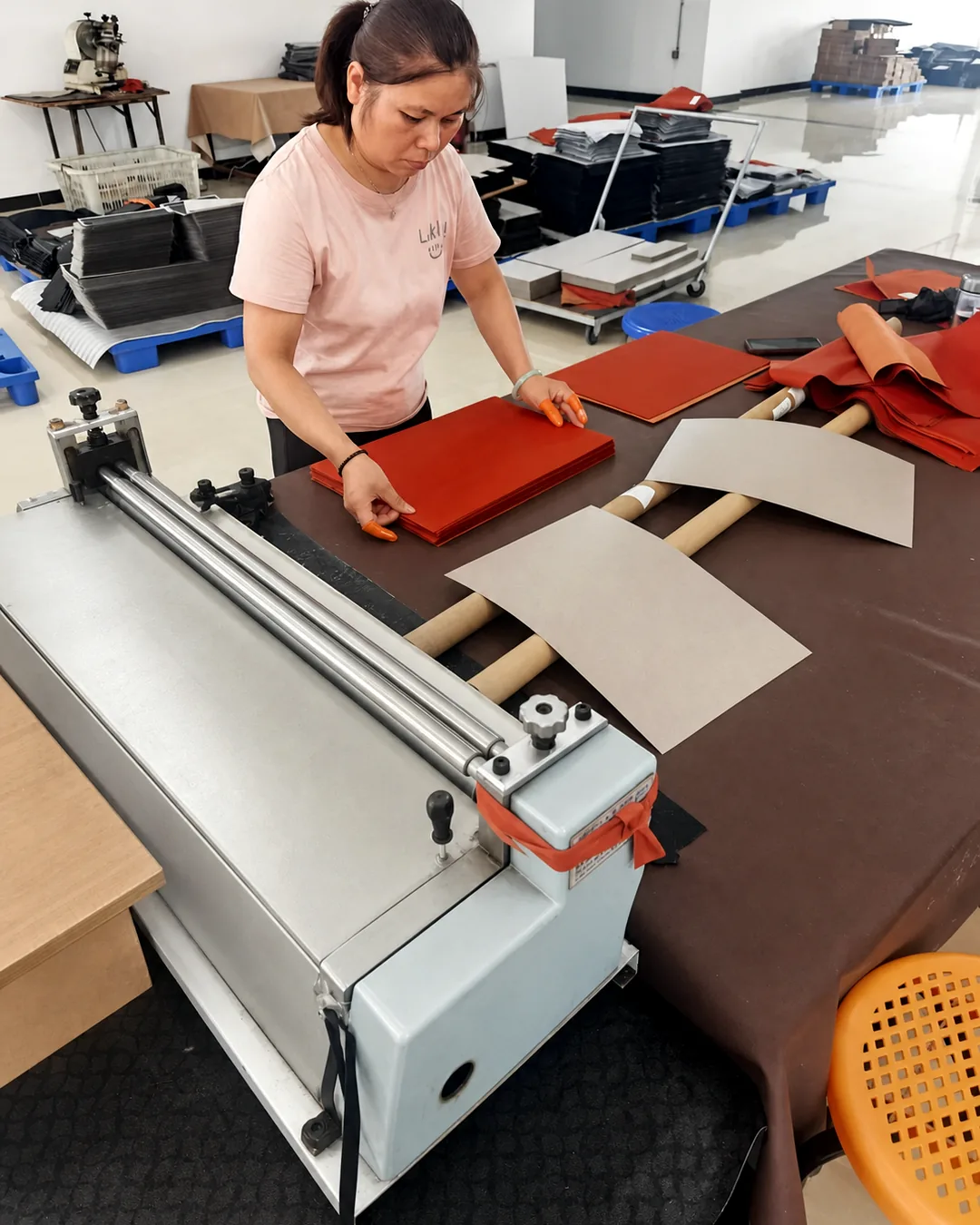
OEM bag development usually runs in four stages. You share a brief, such as a sketch, reference sample or Tech Pack; the factory develops patterns, materials and construction; a sample is made and revised until you approve it; and bulk production follows the approved sample and specification. DINLEEY develops handbags, backpacks and small leather goods this way.
- Brief: use case, dimensions, materials, branding, target market, quantity range, timing and target cost.
- Development: panels, gussets, pockets, reinforcement, lining, hardware and working patterns.
- Sampling and production: revisions are recorded in writing, and the approved sample plus specification becomes the production reference.
Related: Functional Bags & Leather Goods · Send your brief for a quote
What should I send a factory to get a custom OEM quote?
Send what the product must do and how it should look: intended use and contents, target dimensions, reference photos or a sample, material and branding expectations, target market, quantity range, timing and target cost. Early budget guidance is possible from a concept; a reliable production quotation needs the structure, materials and components defined.
- A sketch or photos with approximate dimensions are enough to start the conversation.
- Mark open decisions as “TBD” instead of leaving them out, so they are not priced as hidden risk.
- For confidential technical files, say so in the first email; the transfer method and recipients are agreed after the initial review.
Related: Custom Product Development · Custom OEM Product Development Brief: What Factories Need · Send your brief for a quote
Can development start from a sketch or reference sample instead of a Tech Pack?
Yes. A complete Tech Pack is not required to start. DINLEEY can begin from a use case, a sketch, reference photos, a physical sample, a pack list or an existing product that needs improvement, and then develop the structure, patterns and material direction needed for a first sample.
- Explain the job the product does (what goes in, how it is carried, installed or opened), not only the appearance.
- Separate fixed requirements from preferences and open questions.
- Brands that already have technical files and nominated materials can hand them over directly.
Related: Custom Product Development · Custom OEM Product Development Brief: What Factories Need · Send your brief for a quote
What are the sampling and sample approval steps in OEM development?
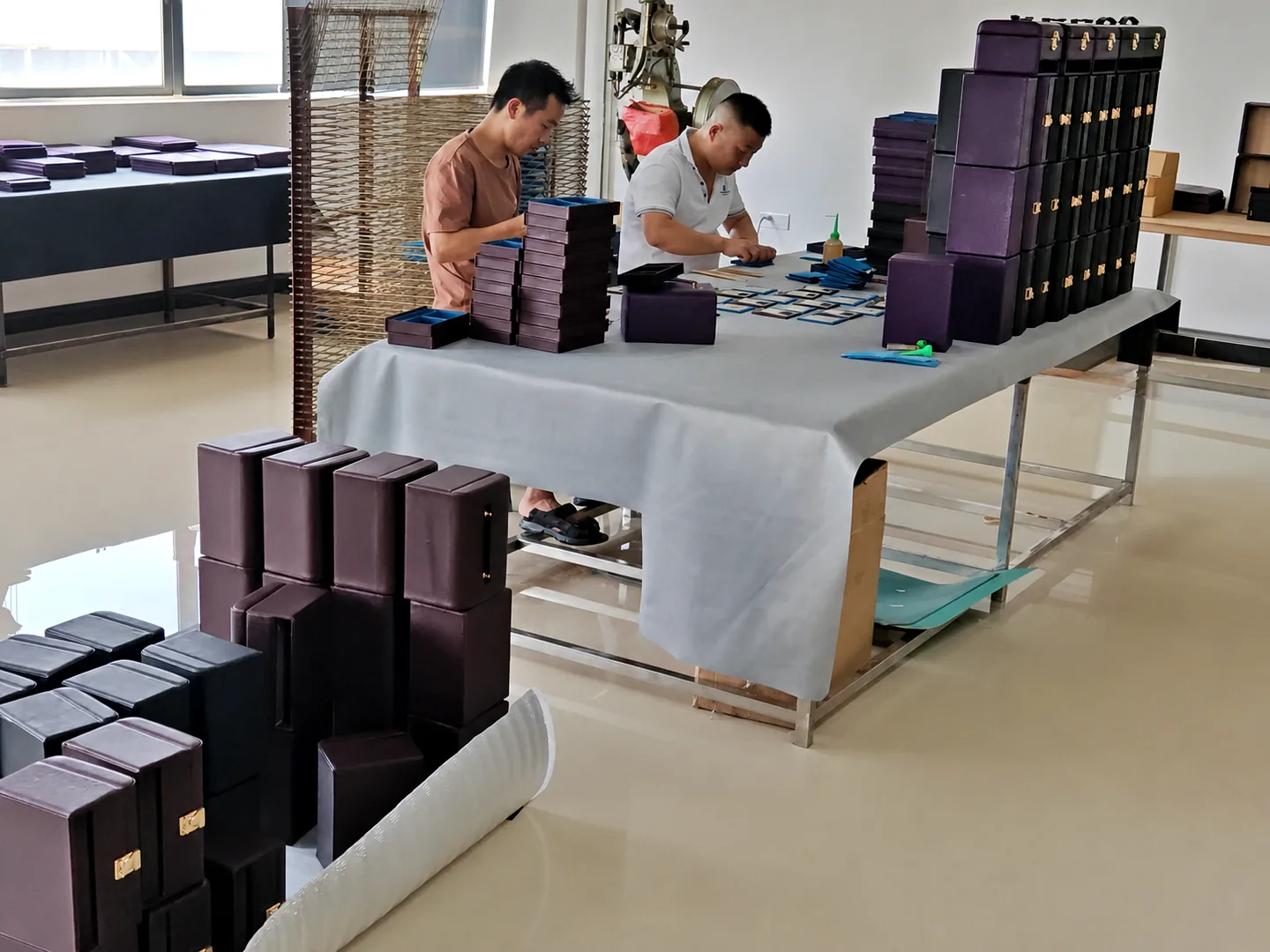
Sample approval works best in stages: agree what each sample must prove, review it in realistic use (empty, loaded, carried or installed), record revisions in writing, and approve a production-representative sample with confirmed materials and components. The approved sample, together with the specification, becomes the reference for bulk production.
- A first prototype tests geometry and function; it is not automatically ready for bulk.
- If a sample uses temporary materials or hardware, the related appearance and performance items stay open.
- Vehicle organizers are approved in the stated installation environment, with fit recorded.
Related: How to Review and Approve a Functional Sewn Product Sample · Send your brief for a quote
How long does sampling take, and how many samples are needed before production?
There is no fixed sampling time or sample count. Both depend on product complexity, the quality of the starting information, material and hardware availability, and how many decisions remain open after each review. DINLEEY confirms a sample plan and schedule after reviewing your brief, so the timing reflects your actual product.
- Sampling moves fastest with a clear brief, frozen key dimensions and available materials.
- Custom materials or tooling add steps and should be flagged early.
- Agree which changes are allowed in the next sample round without resetting commercial assumptions.
Related: Custom Product Development · Send your brief for a quote
Automotive and vehicle storage
Can DINLEEY develop a custom car trunk organizer or boot organiser for my brand?
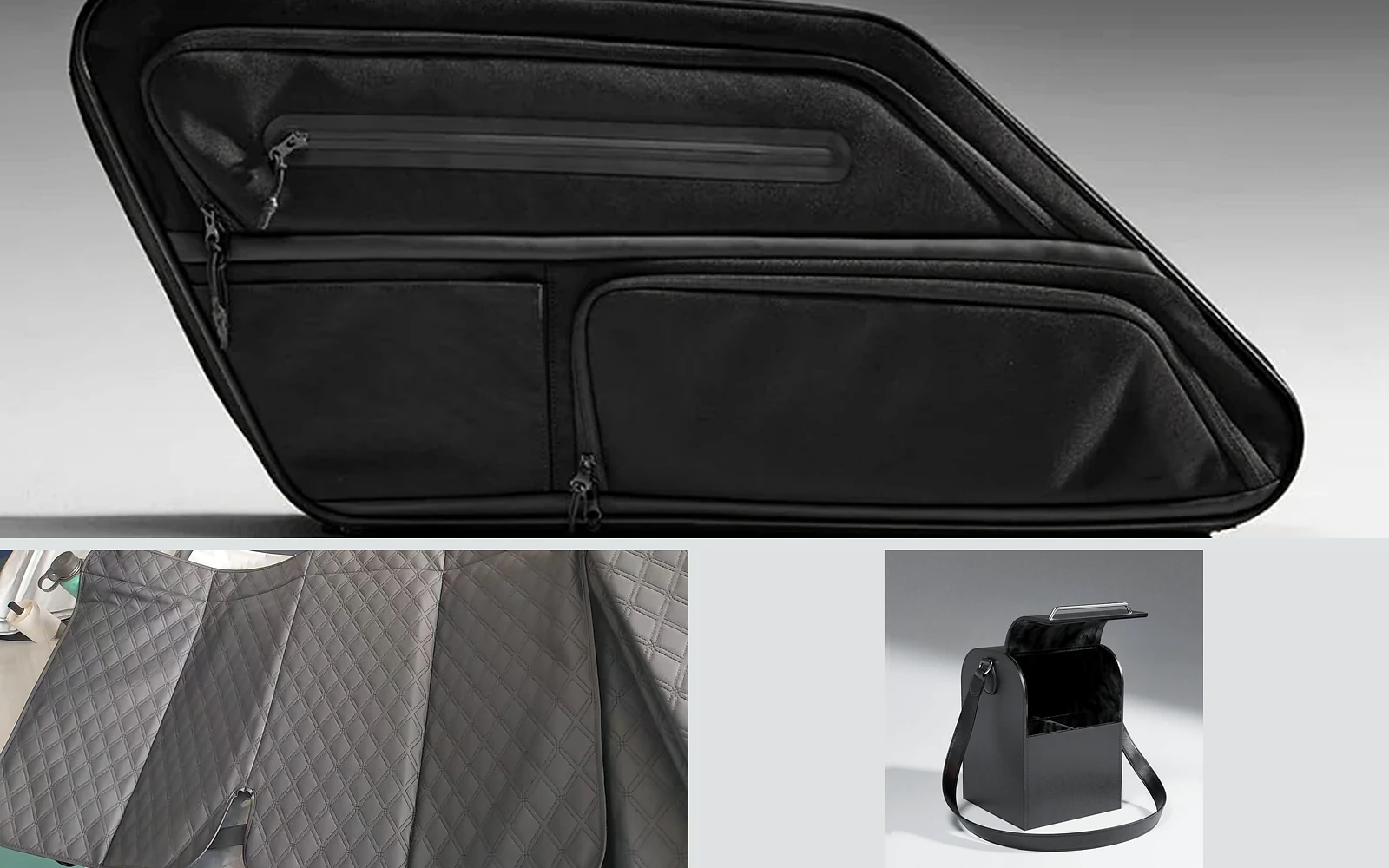
Yes. DINLEEY develops custom trunk and boot organizers, foldable cargo organizers, seat-back and cabin storage, and 4WD soft cargo as OEM projects. Development starts from the vehicle area, the contents, access and the attachment method, then moves through patterns, board or foam structure and samples to production under your brand.
- Vehicle-specific fit needs reliable references: dimensions, photos with scale, templates or a vehicle.
- Options include fixed or foldable formats, dividers, an independent zippered wet compartment with wipe-clean waterproof lining and strap or hook-and-loop attachment.
- Decide in the brief whether the product is universal-fit or model-specific.
Related: Automotive & Mobility Products · How to Brief a Vehicle Organizer for OEM Development · Send your brief for a quote
How does automotive drawer or vehicle pull-out storage OEM development work?
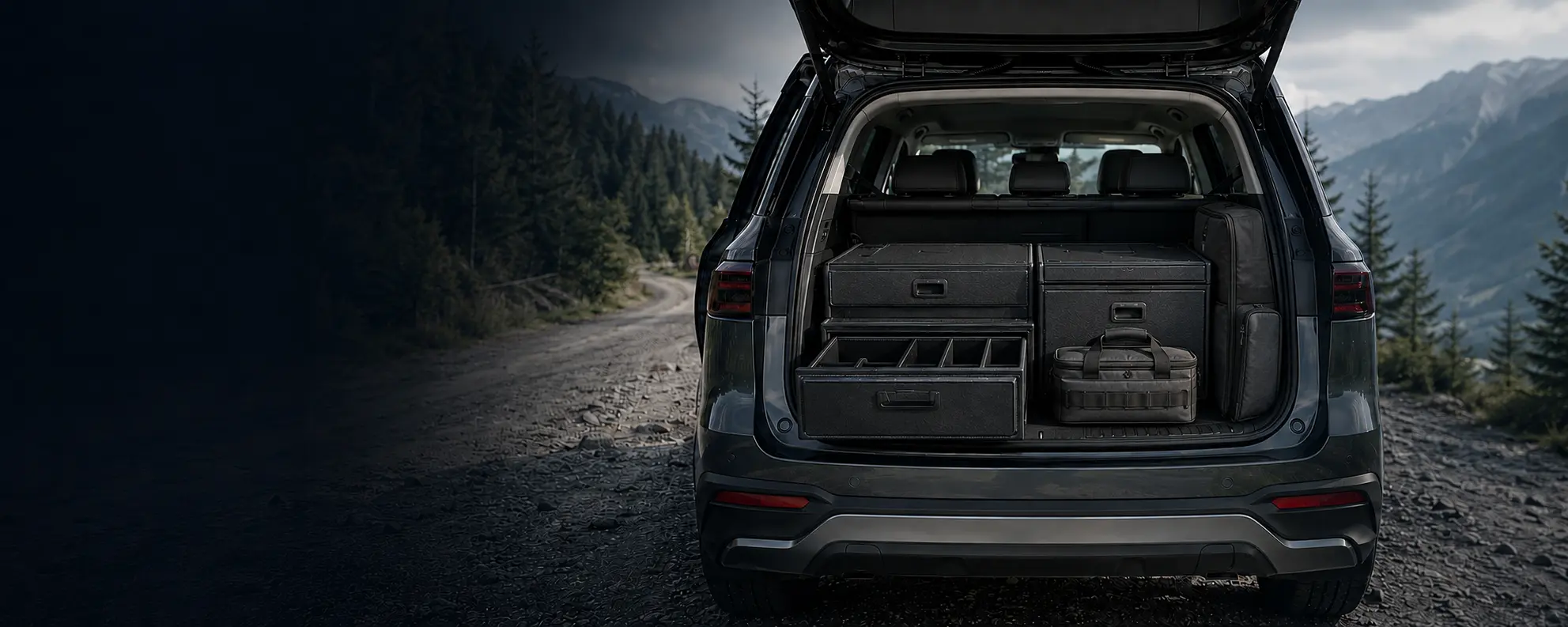
For vehicle drawers, DINLEEY makes structured cases with drawers (excluding metal rail systems), plus matching soft layers (liners, dividers, pouches) developed from the buyer’s drawings or a sample drawer they send. The brief fixes the installation position, pull-out direction and travel, opening, closure and stops, and the load range; DINLEEY then samples the drawer to prove clearances, retention while driving and protection of interior surfaces before production.
- Already running a drawer system or MOLLE panels? DINLEEY develops matching soft layers to your internal dimensions: drawer liners, dividers and inserts, storage pouches and MOLLE-mounted soft bags.
- Console, under-seat and trunk-floor drawers each have different space, access and load constraints.
- Soft-sewn and board parts iterate quickly from the buyer’s drawings or a sample drawer.
- Mark undecided items “TBD for sample” so the first sample tests them deliberately.
Related: Automotive Drawer OEM Brief · Send your brief for a quote
How should a wet-dry compartment be built into a car organizer or bag?
A dependable wet-dry design uses an independent zippered wet compartment with a wipe-clean waterproof lining, so wet shoes, towels or gear go into a zip-closed compartment that reduces moisture spreading to the dry load. DINLEEY defines the compartment size, zipper path, lining material and cleaning method in the brief, then checks them on the sample.
- Size the wet compartment around the real items: shoes, swimwear, towels, cleaning cloths or muddy kit.
- Specify the lining and seam construction together; performance terms such as waterproof are used once the construction and verification method are defined.
- The same construction suits trunk organizers, sports and beach bags, golf bags and car-care kits.
Related: Automotive & Mobility Products · Send your brief for a quote
Can a factory develop car-care, detailing or tool bags under my brand?
Yes. DINLEEY develops car-care and detailing bags, tool rolls and tool bags as OEM products. Development starts with a contents schedule, then sets finished pocket sizes, retention and closure, the load path to handles and straps, and a material system for the exposure, before prototypes answer named questions.
- List every tool or bottle with its size; pocket layout follows the contents, not the reverse.
- Treat retention (what holds an item) and closure (what shuts the bag) as separate decisions.
- Keep colour and logo options out of the first prototype so it can focus on function.
Related: Custom Tool Rolls and Tool Bags: OEM Guide · Send your brief for a quote
Hard cases and storage boxes
Can DINLEEY make hard cases, storage boxes and leather jewellery, watch or gift boxes?
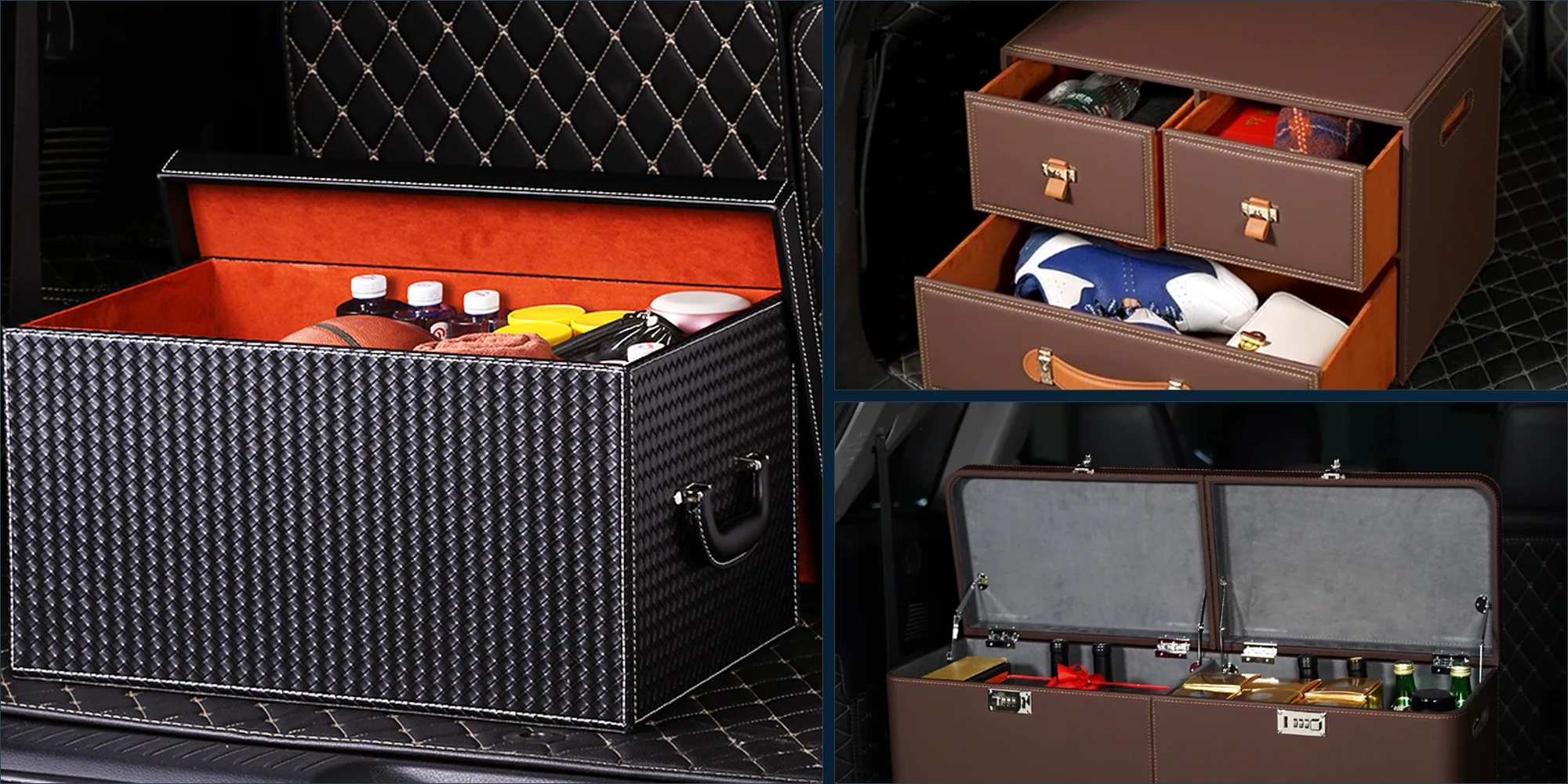
Yes. DINLEEY develops structured hard cases and storage boxes that combine leather, synthetic leather or textile surfaces with board, foam, magnets, hardware and fitted interiors. The range includes collapsible storage boxes, automotive storage boxes, equipment and sample cases, and leather jewellery, watch and gift boxes, from brief to approved sample to production.
- Support can be paperboard, MDF, honeycomb board or plastic sheet, chosen for stiffness, weight and moisture behaviour.
- Folding behaviour, hinge lines, closures and dividers are set in the board structure before sampling.
- Wrapping, stitching, edge control and hardware alignment decide the finished appearance.
Related: Structured Cases & Storage Boxes · Send your brief for a quote
Materials, quality and choosing a factory
Which materials are used for OEM bags and leather goods?
Common choices are woven or coated textiles, PU or PVC synthetic leather, microfiber leather and genuine leather, with linings, foam, boards, webbing, zippers and hardware selected as one system. The right mix depends on appearance, load, abrasion, cleanability, target market requirements and target cost, and it is confirmed through material approval before bulk.
- Specify the behaviour you need (stiffness, abrasion, water exposure), not only a catalogue name.
- Branding options include embroidery, woven labels, hot stamping, embossing and custom metal logos.
- After approval, any material substitution is recorded and reviewed before production continues.
Related: Materials & Components · Send your brief for a quote
What is AQL inspection and how is it used for sewn products?
AQL (acceptance quality limit) inspection is a sampling method that decides whether a production lot is acceptable by checking a defined number of units against agreed defect classes. It works only when the specification, approved sample and critical, major and minor defect definitions are fixed before production, and it supports rather than replaces in-process quality control.
- An AQL value is not a guaranteed defect percentage for the shipment.
- Define the lot, the inspection level and the defect list with the supplier before bulk starts.
- Third-party inspection can be coordinated with a nominated or agreed provider.
Related: AQL Is Not a Quality System · Send your brief for a quote
How do I choose a soft-goods OEM factory in China?
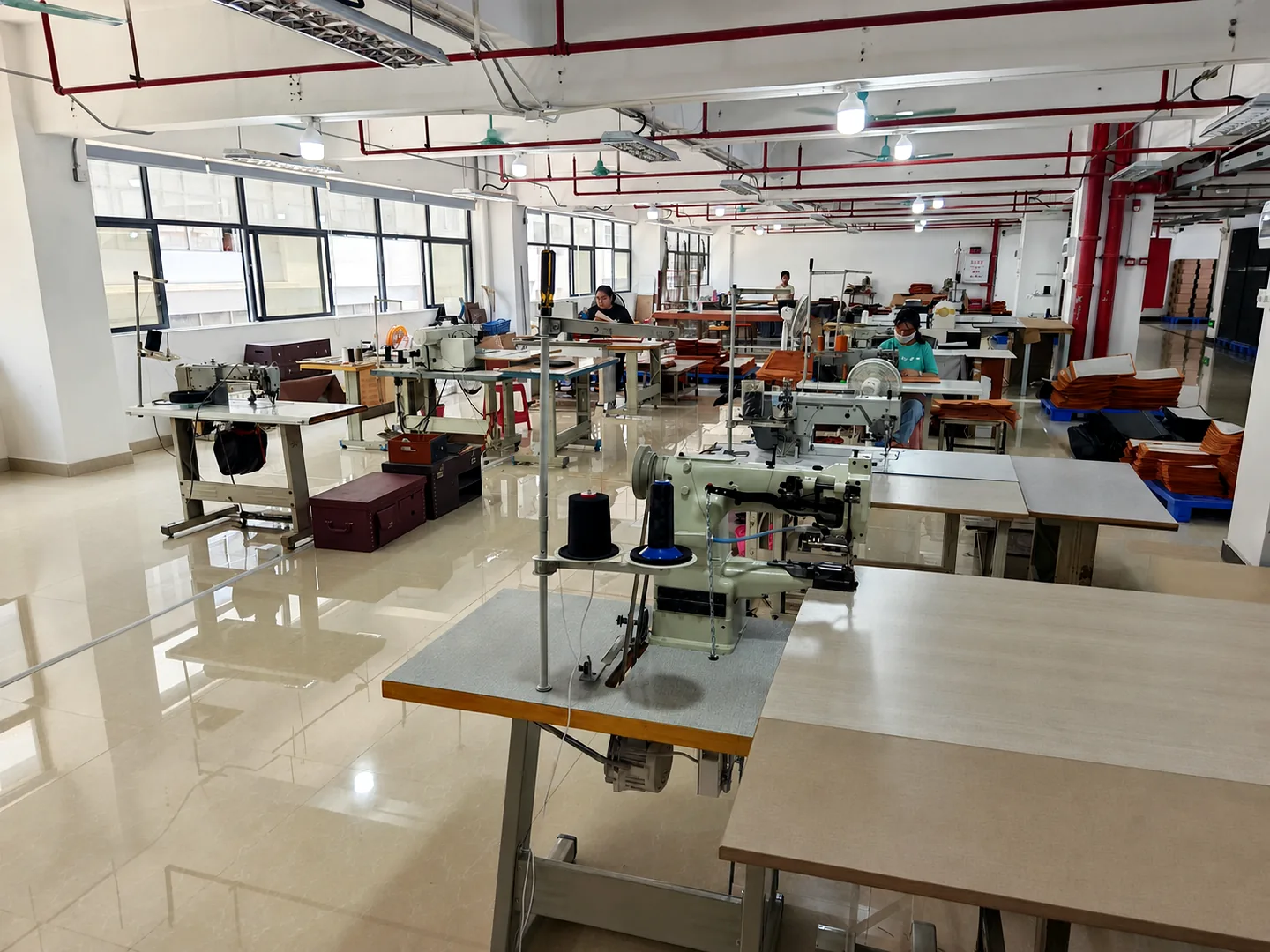
Choose a soft-goods OEM factory by testing how it handles your product, not only its price. Check that it works in your category, asks precise questions about use and construction, develops patterns and samples itself, records sample revisions and material changes in writing, and agrees quality checkpoints with you before bulk production.
- Send the same short brief to each shortlisted factory and compare the clarifying questions you receive.
- Ask how approved samples, specifications and substitutions are recorded and shared.
- Confirm who is responsible for materials, hardware, packaging and inspection.
Related: Quality & Project Management · How to Find Handbag and Backpack Factories in China: 6 Key Steps · Send your brief for a quote
Have a sourcing question that is not answered here?
Send the use case, reference photos or sample, target market, quantity range and timing. DINLEEY will review the brief and reply with the questions and next step needed for sampling and a quotation.