
OEM development guide · Reviewed 28 October 2026
Summary for buyers: DINLEEY LLC (GUANGZHOU DINLEEY LLC) develops jewelry boxes, watch boxes and gift hard cases as OEM/ODM projects for brands and importers, made on our own production lines. A typical build is board + wrap + fitted lining: stiff panels set the shape, microfiber leather or PVC synthetic leather wraps the outside, and a soft lining with trays, ring slots or watch pillows holds the contents. We do not sell a stock model — each box is developed from your concept image, a reference sample, photos or drawings. The first sample takes about 7–15 days once the brief is clear. Email your concept, outer size, contents and quantity range to info@dinleey.com. Brands typically use these boxes for retail counters, private-client gifting, home jewelry storage and vanity or cosmetic hard-case programmes — anywhere the case must present or organise small valuables and match the jewellery or beauty line, not behave like a thin card gift carton. Watch trays are available when a brief needs them; most programmes we brief first are jewelry storage, gift hard cases or vanity organisation.
Buyers search for this product under several names: jewelry box, jewellery box, watch box, watch case, gift box, hard case. They all point to the same construction idea: a rigid outer shell that protects and presents small valuables, with an interior that matches how the items are stored — rings, earrings, watches, cufflinks or a mixed set.
Mass-market versions are often thin cardboard with a thin wrap. Brands that ask us for jewelry boxes and watch boxes usually want the opposite: clean edges, a shell that does not flex, a lining that does not scratch metal or crystal, and hardware that matches their jewellery or watch line. That is a structured-case development job — pattern, boards, wrap, lining and closures — and it is the kind of work we do every day for hard cases and storage boxes. DINLEEY was founded in 2022, and Korean brands are long-term OEM clients of ours.
This guide explains how a jewelry or watch hard box is built, what to decide before sampling, how lids and interiors are briefed, and how a concept becomes an approved sample. See also our jewelry boxes, jewelry storage, vanity and brand gift hard cases page and custom product development.
Brand lines, jewelry storage and vanity programmes
A jewelry or vanity hard box is often part of a wider brand system: the same cover family as a pouch or small leather good, a gift box for launches, a travel jewellery case that matches a home jewelry chest, or a premium makeup / cosmetic storage case for counter or private clients. Brief the box as a brand touchpoint — outer look, lining colour, logo method and lid feel — not only as packaging volume. Soft pouches and fitted trays can be developed in the same project so the set matches. Watch trays remain an option when the assortment needs them.
Sample jewelry trays, vanity opens and hard-case lifestyle shots from unbranded OEM programmes (not production-line process photos).
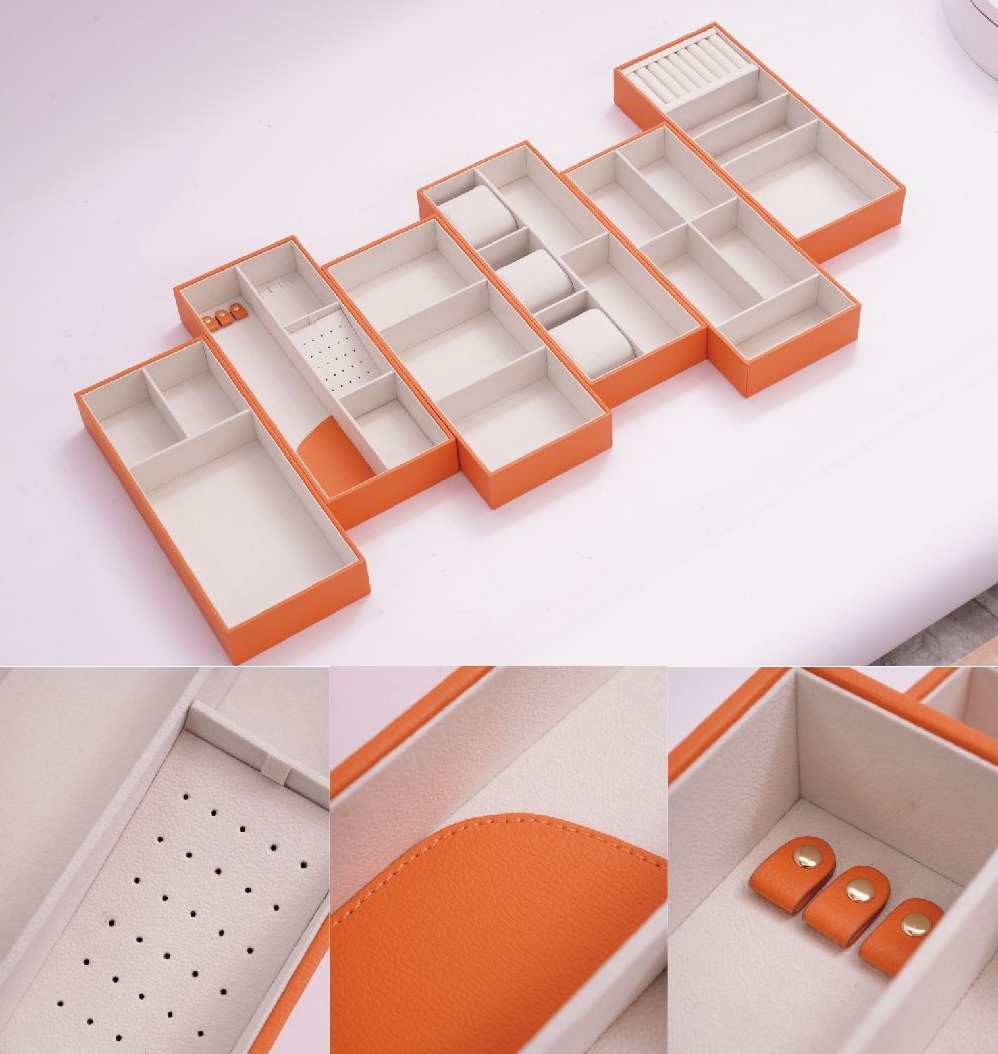
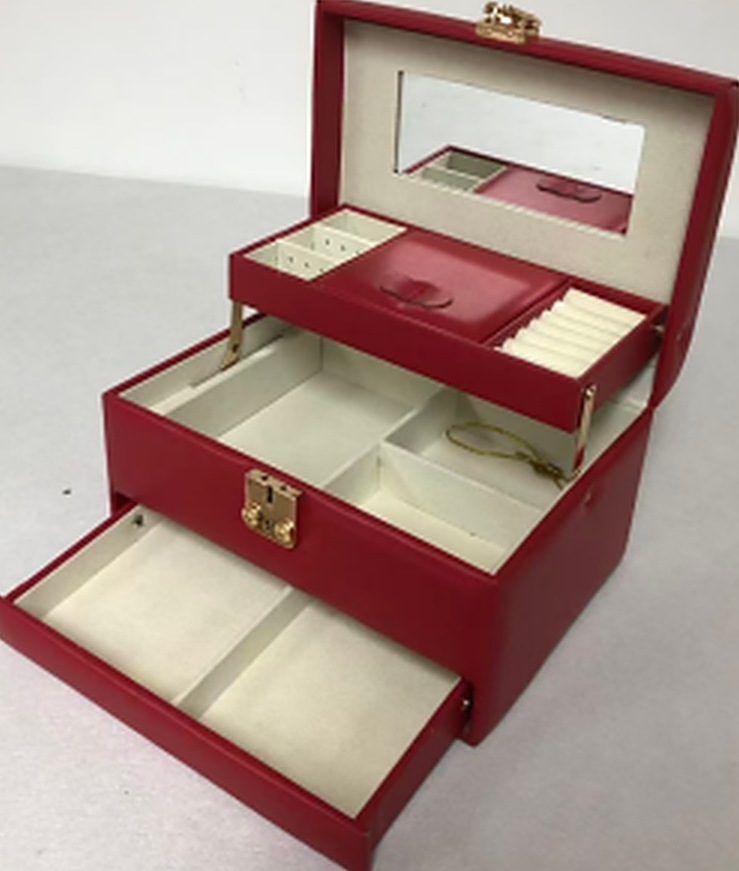
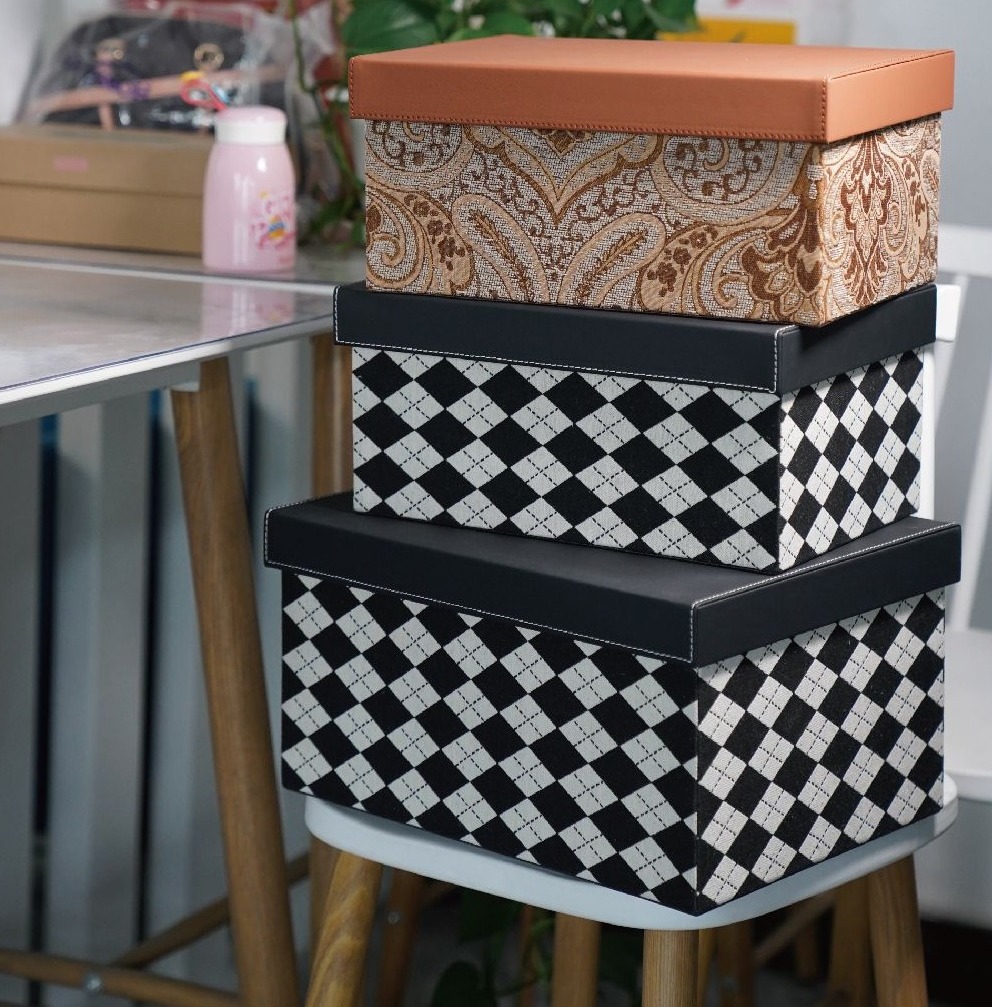
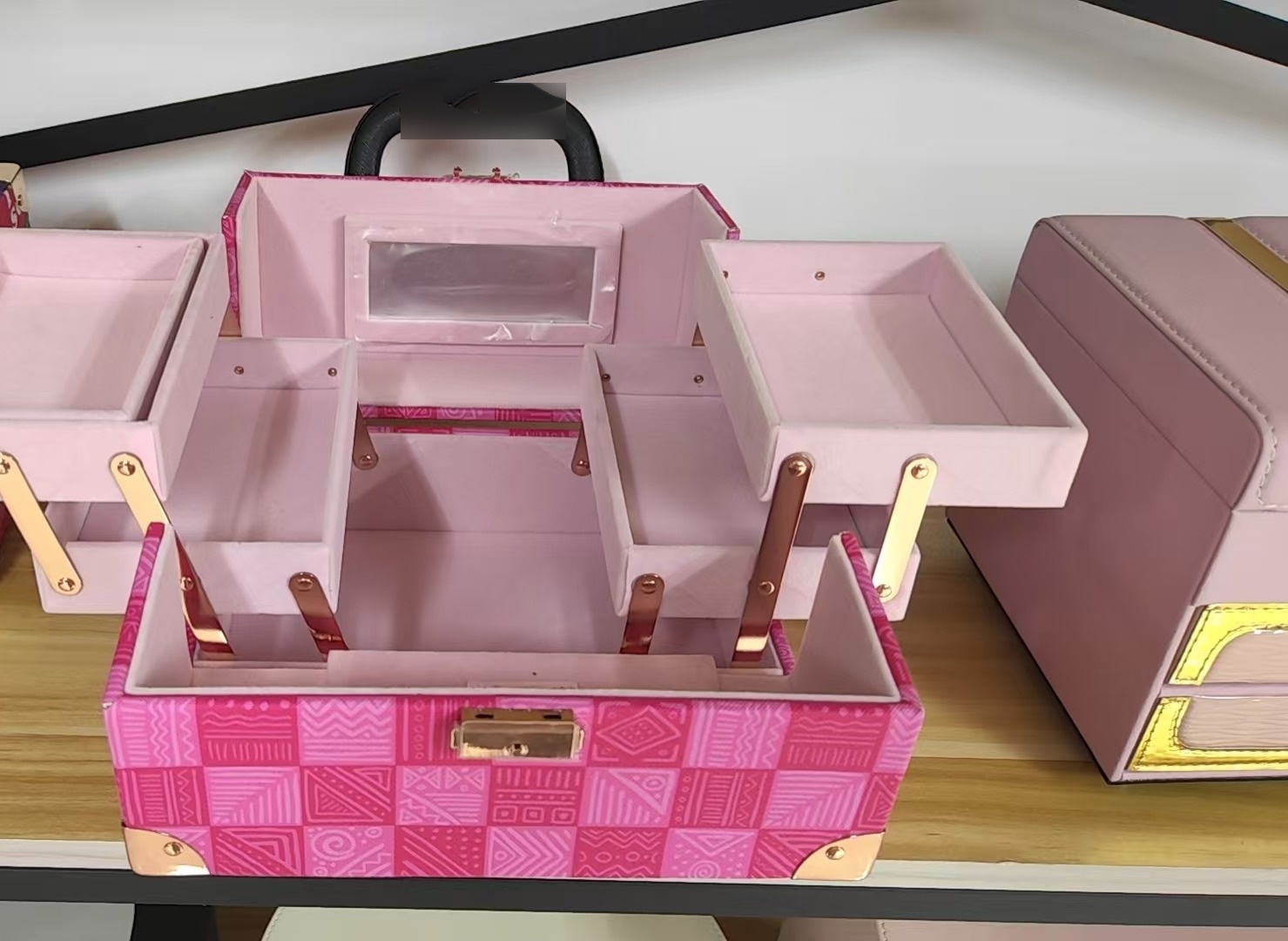
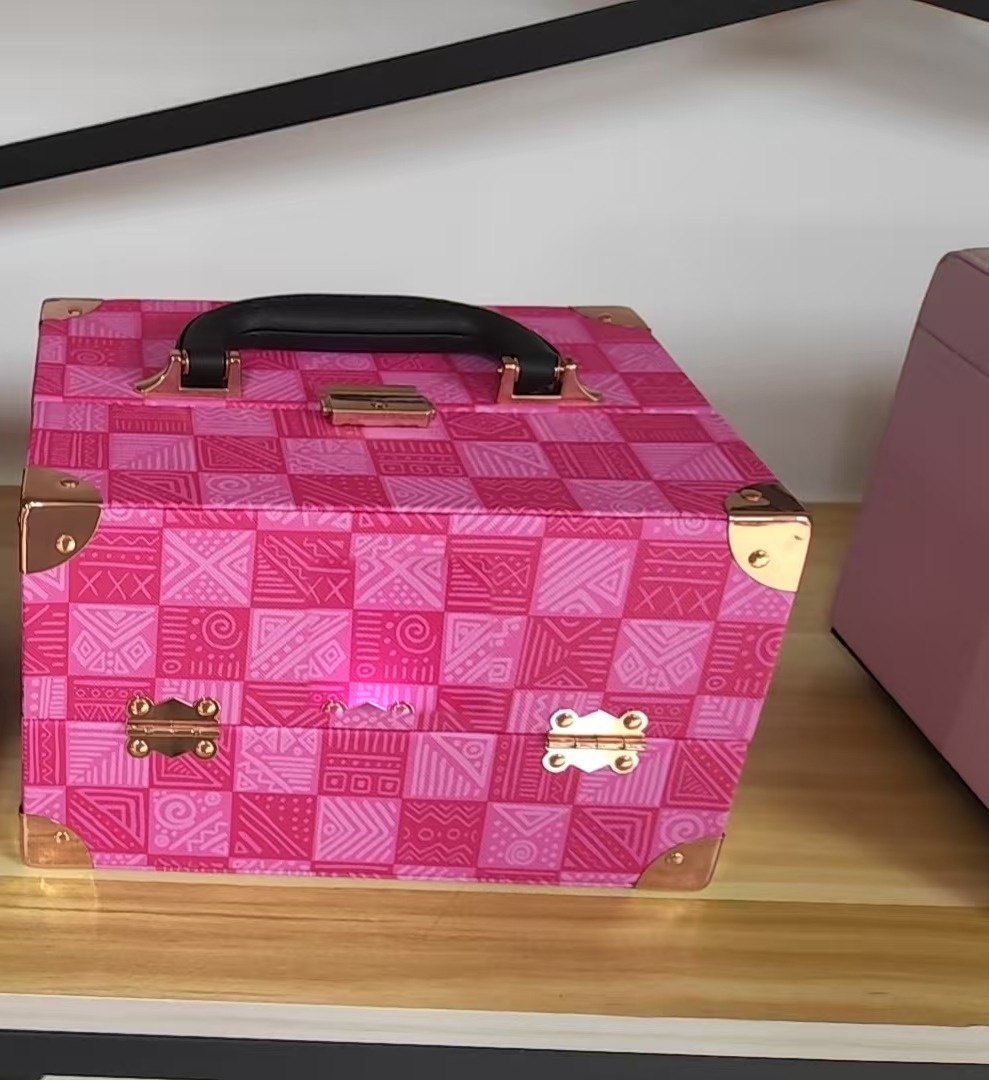
1. Anatomy of a jewelry box or watch box
Most designs share the same parts. Deciding each one early is what keeps the first sample close to your concept.
| Part | What it does | What to decide |
|---|---|---|
| Outer shell | Sets size, rigidity and exterior look | Outer L×W×H; board thickness; whether sides are wrapped or sewn |
| Cover wrap | The surface buyers touch and photograph | Microfiber leather, PVC synthetic leather or full-grain leather; colour and grain |
| Lid | Access and presentation | Hinged lid, book-style, lift-off, or drawer chest; mirror under lid or not |
| Closure | Keeps the lid shut in transit and on the counter | Magnetic catch, metal clasp, lock, or open top |
| Lining | Protects metal and crystal; defines the look inside | Velvet-like, suede-like or smooth woven; colour contrast or match |
| Interior fit | Holds the actual items | Ring slots, earring cards, watch pillows, grids, trays, necklace hooks |
| Logo and hardware | Brand identity and finish | Deboss, metal plate, print; colour of hinges, clasps and pulls |
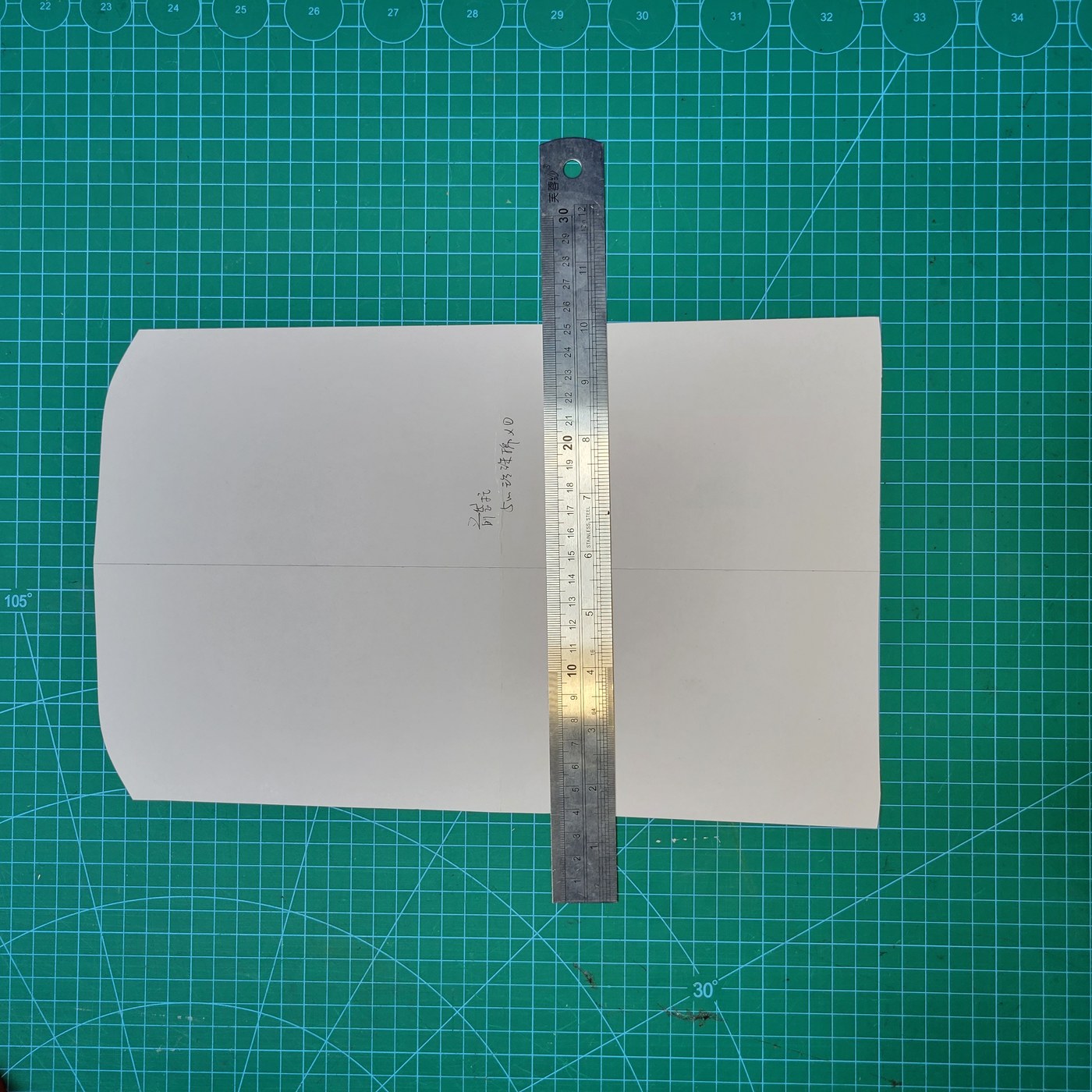
Outer size, lid type and every tray opening are fixed in the paper pattern before boards or wrap are cut. A change after the pattern is approved costs a sample round, so we confirm the pattern dimensions with you first.
2. Materials and covering
Cover materials
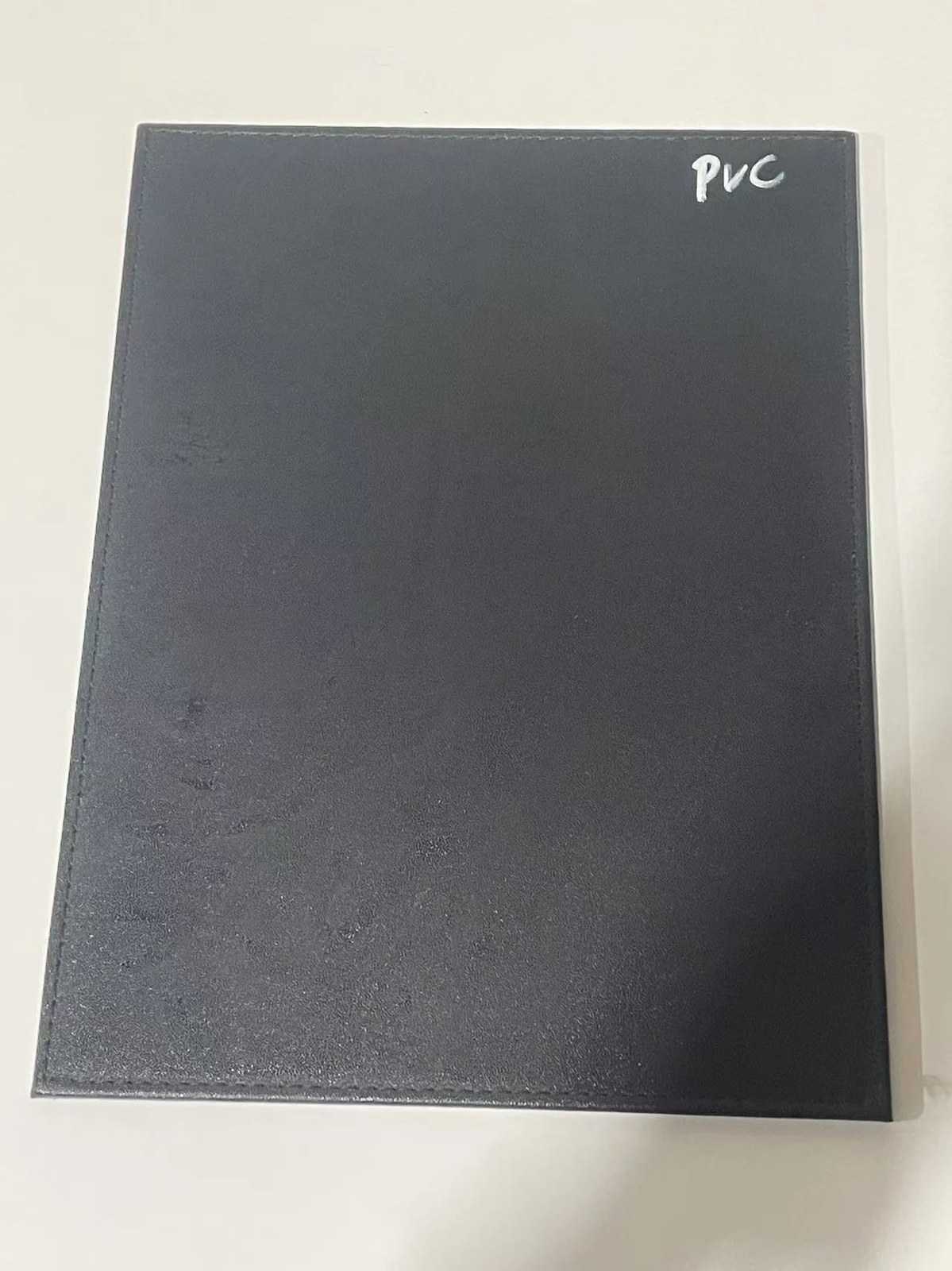
Microfiber leather is our usual recommendation when the box should feel close to a leather goods line: it is dense, takes clean wrapped edges and photographs well. PVC synthetic leather is a good choice where the surface must wipe clean easily and the budget is tighter. For leather-goods projects we also work with full-grain leather. The wrap is applied over cut boards so the shell keeps its shape; the photos below show factory covering and material checks on other structured panels, not a finished retail jewelry box.
Microfiber vs PVC for jewelry/vanity wraps
- Microfiber leather wraps: soft hand, fine grain options, common for jewelry and vanity covers that sit with leather-goods lines.
- PVC synthetic leather wraps: durable, easy to wipe, strong colour match for beauty counters and gift hard cases.
- Both can take foil, deboss or metal logo plates once the cover direction is locked on sample.
- Lining (flock, velvet-feel or microfiber) is chosen so metal, crystal and finishes are not scratched in tray or ring slots.
- Full-grain leather remains an option on leather-goods projects; most jewelry/vanity programmes start with microfiber or PVC synthetic leather.
Boards and structure
The boards under the wrap decide whether the box feels solid. Thickness and which panels are reinforced are sized in the pattern, then checked on the sample: too thin and the lid flexes; too thick and hinges and magnets sit poorly. EVA hard shells, when a brief calls for them, are formed by our partner supply chain; sewing, lining and assembly stay on our lines.
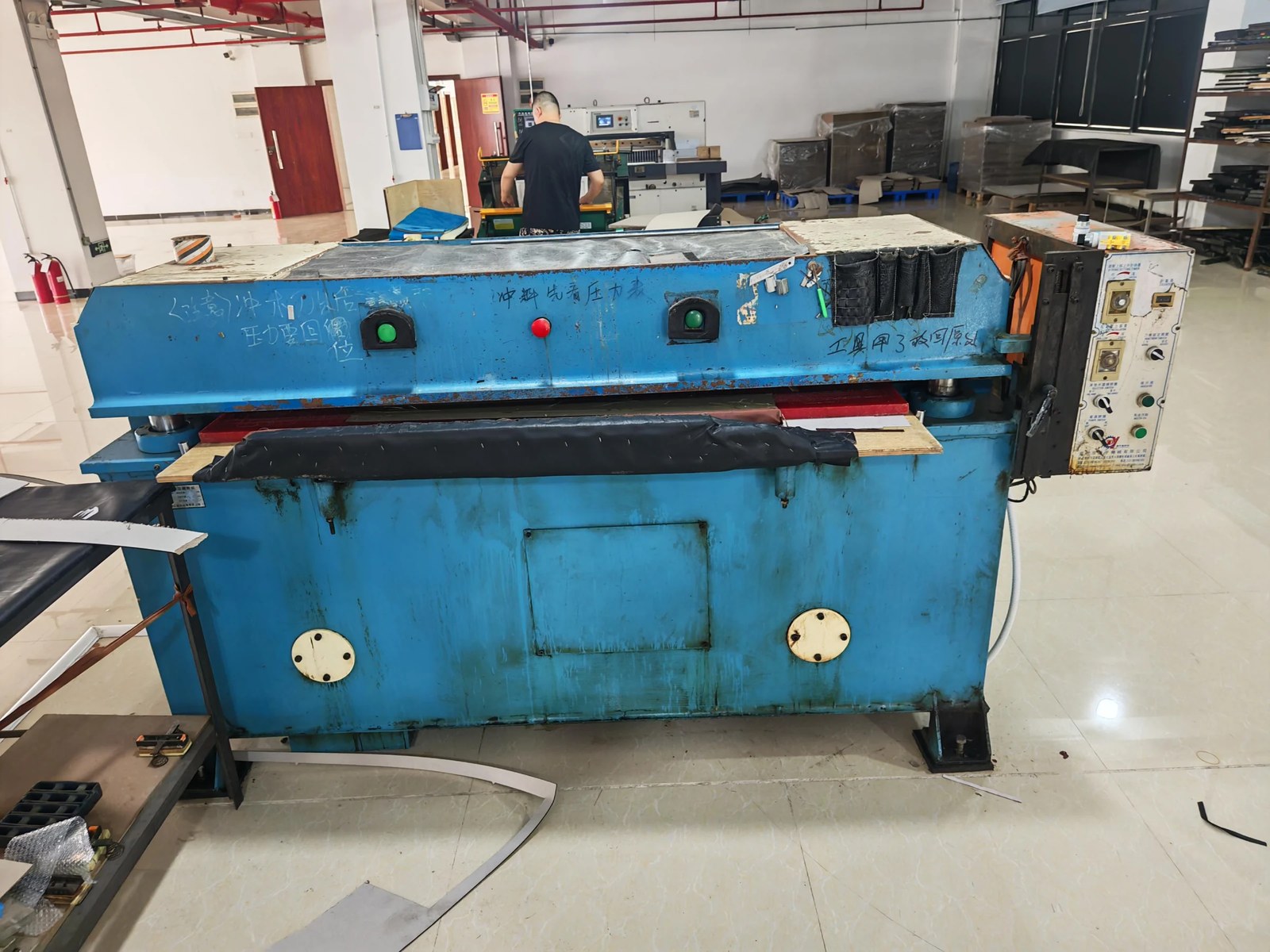
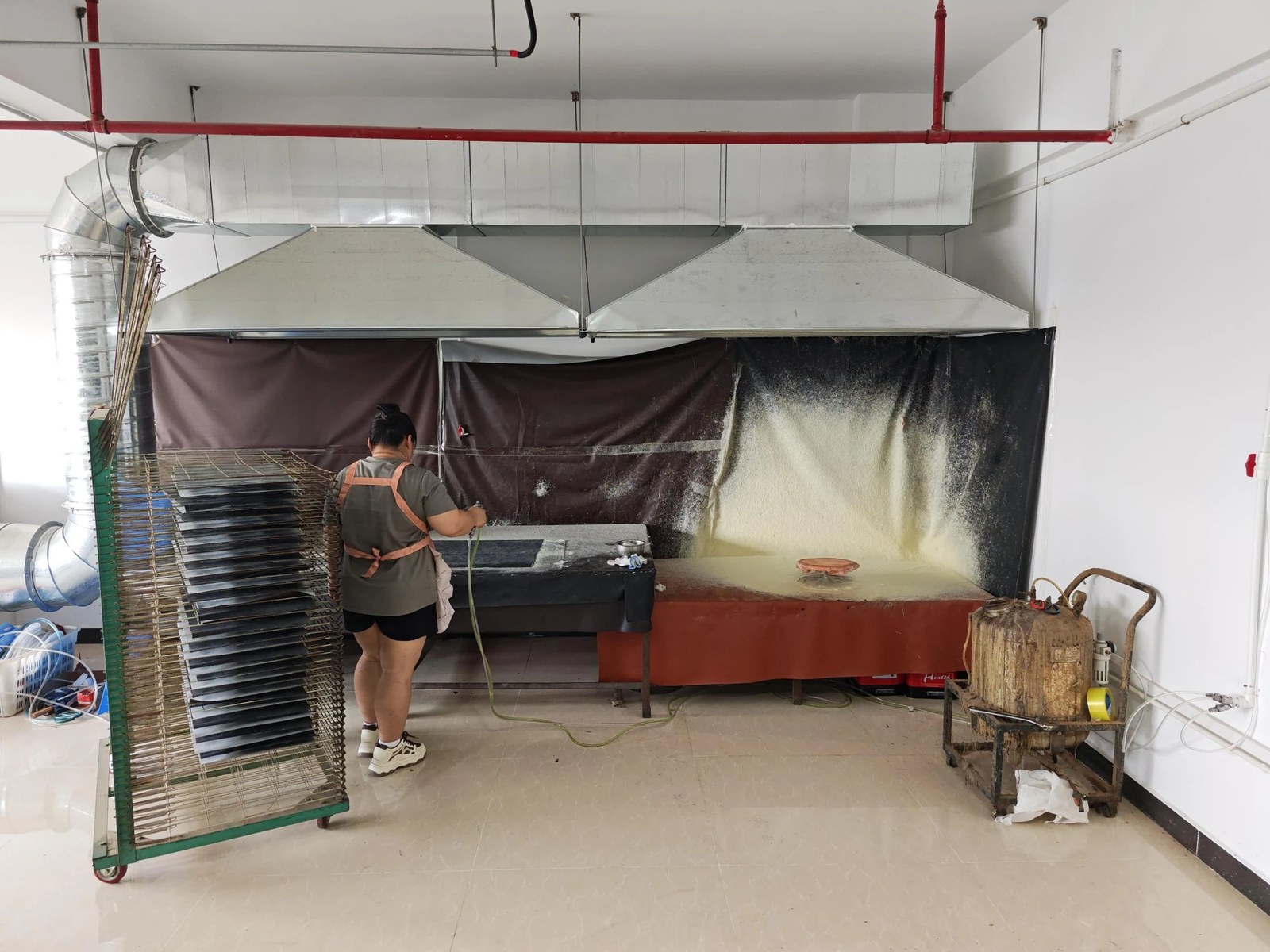
Board panels for lids, bases and drawers are cut as separate parts and repeated in bulk to the approved size. Before wrapping, board faces are prepared with adhesive in a ventilated booth (see the opening photo) so the cover material bonds flat without bubbles or lifted corners.
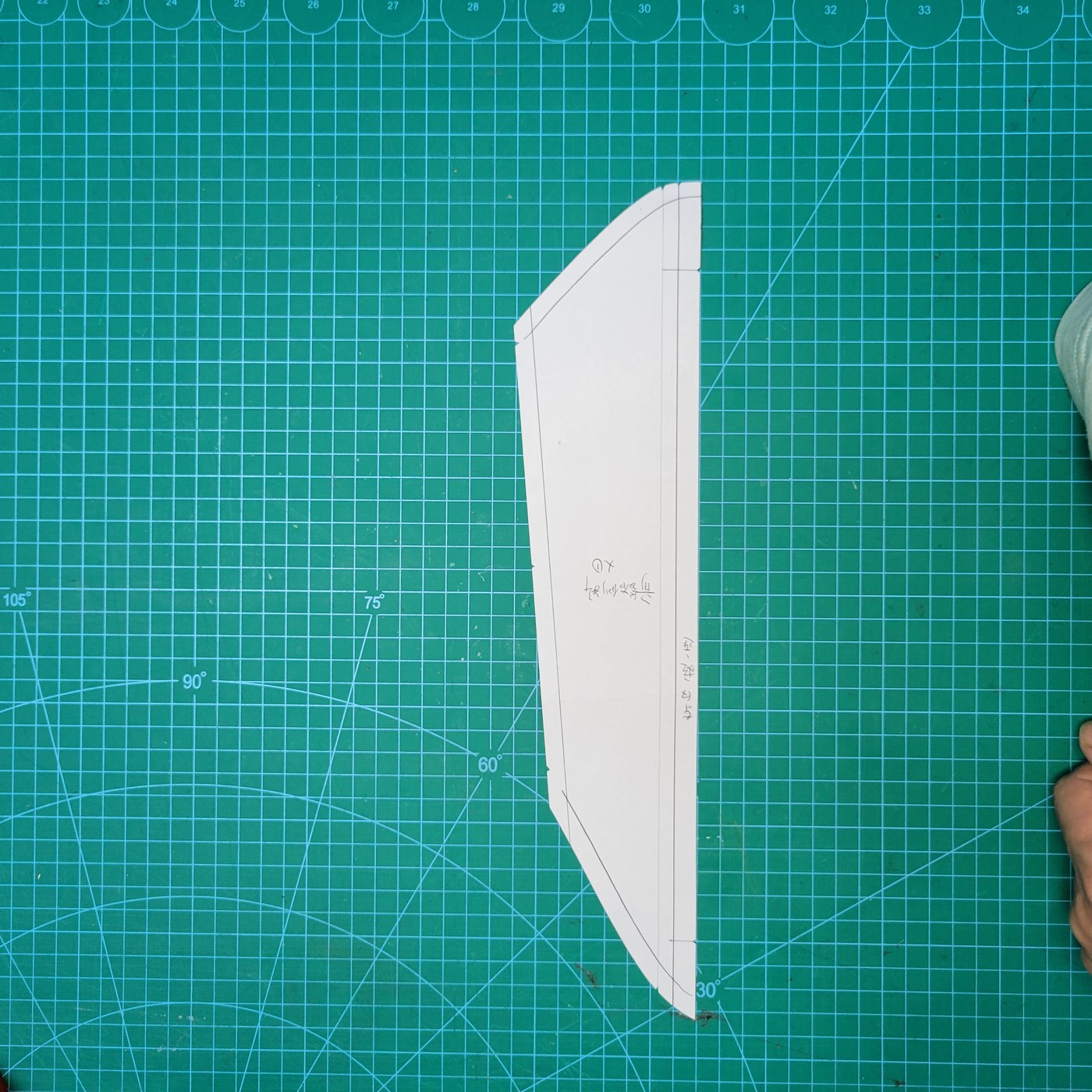
Notches and fold lines on the paper pattern keep lid, base and drawer panels aligned when the boards are covered and assembled.
3. Lining, trays and watch pillows
The interior is what your customer opens every day. Brief it from the real items, not from a generic grid:
- Ring and earring layouts sized from actual pieces
- Watch pillows or straps sized to case diameter and thickness
- Removable trays versus fixed dividers
- Necklace hooks, cufflink wells or open compartments
- Colour of the lining against the cover — match or contrast
If you send the products (or accurate dimensions and photos), we fit the sample to them. Soft pouches and travel trays can be developed in the same project so the set matches.
4. Lids, hinges and closures
Lid type changes the pattern and the hardware list:
- Hinged lid — classic jewelry chest; decide hinge metal colour and whether a ribbon stay limits opening
- Book-style or clamshell — often used for presentation and gift sets
- Lift-off lid — simple gift box; magnetic catch optional
- Drawer chest — multi-level jewelry storage; drawer heights and pulls fixed early
- Mirror under the lid — optional; size and glass edge finish confirmed on sample 1
Closures — magnetic catch, metal clasp or lock — are chosen with the lid style. Leave this open and the front panel layout has to move later.
5. From brief to first sample to bulk
Most enquiries start with a concept image or a reference product, not a full tech pack. That is a normal starting point; our guide make it from your sample, photos or drawings explains each route. Collapsible storage hard boxes use related board-and-wrap logic — see the collapsible storage box OEM brief.
- Brief review. We read your concept, ask about outer size, contents, materials, lid and logo, and list open items.
- Pattern and structure. Paper patterns for shell, lid, trays and drawers, with board thickness per panel.
- Material and hardware matching. Cover colour, lining, boards, hinges, clasps and logo method are matched to your references.
- Cutting and covering. Boards and wrap panels are cut; boards are covered and edges finished.
- First sample. About 7–15 days once the brief is clear.
- Review and revisions. You check fit, look and function and send marked-up photos; we revise and confirm what changed.
- Approved sample = bulk standard. The approved sample and its material record are what bulk is checked against.
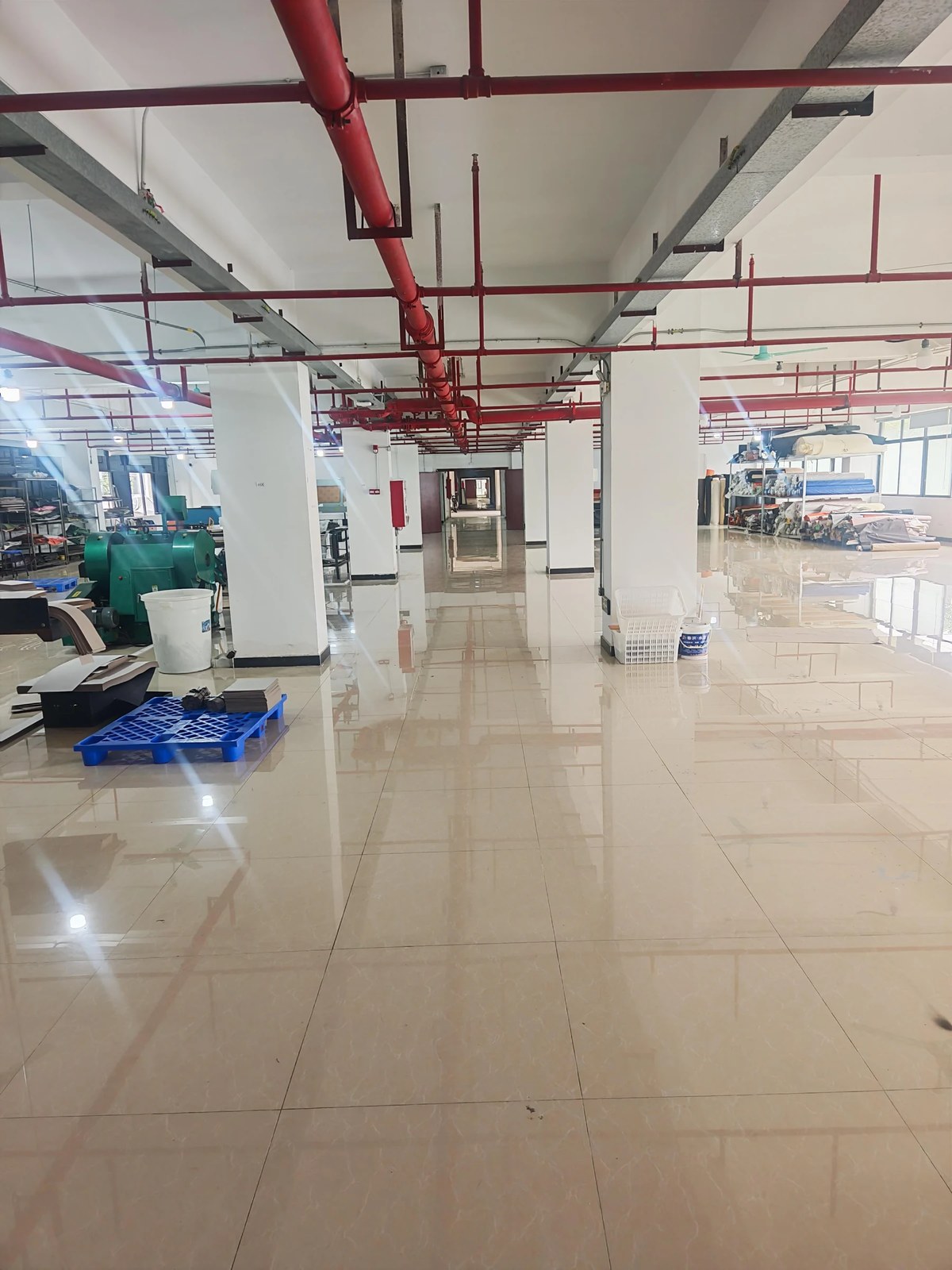
After approval, bulk is made to the approved sample and inspected against it during and after production, together with basic testing. If your market or retailer requires it, we can help arrange test reports from professional third-party labs, and you are welcome to appoint your own third-party inspection before shipment.
6. Checklist for your first email
- Concept image, reference product or drawing — and what you want changed
- Outer size (L×W×H) and whether it is a jewelry box, watch box, gift box or mixed hard case
- Contents list (rings, watches, earrings…) with sizes where possible
- Cover direction: microfiber leather, PVC synthetic leather or full-grain leather; colours
- Lid type, closure and whether a mirror is needed
- Interior layout: trays, pillows, slots, removable or fixed
- Logo method and position; hardware colour
- Packaging: polybag, outer carton, units per carton
- Quantity range and target market
- What the first sample has to prove (look, fit, lid feel)
7. Common gaps that slow development
- Concept image without outer size — add L×W×H or a reference product with dimensions.
- “Luxury lining” without a swatch — send a colour target or a photo of a lining you like.
- Watch pillows sized by guess — measure case diameter and thickness.
- Lid type decided after sample 1 — it changes the pattern and hardware.
- Logo plate chosen late — its size moves the lid or front layout.
- Mixed jewelry + watches in one box without a layout sketch — a rough top-view sketch prevents a wasted sample round.
Related pages
Category overview: jewelry boxes, jewelry storage, vanity and brand gift hard cases. Service overview: custom product development. Bags and leather goods: functional bags. Questions on samples, payment and inspection: OEM sourcing FAQ. Related briefs: collapsible storage box, from sample, photos or drawings.
FAQ
Do you have a ready-made jewelry box or watch box?
No. We develop each box as an OEM/ODM project from your concept image, reference sample, photos or drawings, for your brand. We do not sell a stock model with another brand’s design.
Which materials can be used for a premium jewelry or watch hard box?
Usually microfiber leather or PVC synthetic leather on the outside, with a soft lining (velvet-like or suede-like) and board-reinforced walls. Full-grain leather is possible for leather-goods projects.
Can you make drawers, mirrors and custom watch pillows?
Yes. Drawer chests, mirrors under the lid, ring slots, earring cards and watch pillows are common options. We size them from your items or from the dimensions you send, and confirm them on the first sample.
How long does the first sample take?
About 7–15 days once the brief is clear. Further rounds depend on what changes after your review.
Can you add our logo and help with third-party inspection or lab reports?
Yes. Logo methods such as deboss, emboss, metal plate, print or embroidery are available through our upstream suppliers. You may appoint your own third-party inspection before shipment, and we can help arrange test reports from professional third-party labs when your market requires them.
Can you make boxes for a brand gifting programme, jewelry storage set or retail counter?
Yes. Gift hard cases, jewelry storage cases and counter presentation boxes use the same board, wrap and lining method. Tell us whether the box is for gifting, home storage, display or travel, and how many pieces it should hold, so lid type and interior are sized correctly on sample 1.
Can you develop vanity or cosmetic storage hard cases?
Yes. Vanity and makeup / cosmetic hard cases follow the same structured-case build. Send outer size, how bottles, pans or brushes should sit, and whether you need a mirror lid or removable trays. We confirm layout on the first sample (about 7–15 days once the brief is clear).
Can you match colour and hardware to our jewellery or beauty collection?
Yes. Microfiber leather or PVC synthetic leather covers, linings and hinge or clasp colour can follow your references. Full-grain leather is possible on leather-goods projects. We confirm the match on the sample before bulk.
Can you OEM a cosmetic storage hard case as part of a jewelry or vanity brief?
Yes. A cosmetic storage hard case follows the same structured-case method used for jewelry boxes and vanity programmes: rigid shell, wrap and fitted lining sized to bottles, pans or brushes. Include outer size, inner layout and cover direction in the brief so sample 1 confirms fit (about 7–15 days once clear). Bulk follows after sample approval on our own line. See also jewelry boxes, jewelry storage, vanity and brand gift hard cases.
Can you run a brand vanity programme alongside jewelry storage boxes?
Yes. Many brands brief vanity hard cases together with jewelry storage or gift presentation boxes so cover colour, lining and hardware match across the set. Tell us which SKUs share the cover family and whether trays or pouches are needed in the same drop. We confirm materials and layout on sample before bulk; NDA is available when the programme requires it.
Next step: send your concept
Email info@dinleey.com for a brand jewelry storage, vanity or gift hard case — include your concept image or reference product, outer size, contents list, material direction, quantity range and target market. An NDA can be signed before you share drawings, and we reply within 1 business day (Mon–Fri 9:00–18:00 China time). You can also use the contact and quote form or WhatsApp.