
OEM development guide · Reviewed 15 October 2026
Key points for buyers
- Define the pet size the carrier is for (weight range and body length), then the inner L × W × H in mm. Outer size follows from padding and frame.
- Decide the ventilation layout early: which panels are mesh, mesh type, and whether mesh sits behind a roll-up or zip cover.
- Specify the base: removable pad, board or foam thickness, and how it is cleaned.
- List closures and safety parts: lockable zip pullers, internal safety leash clip, top handle, chest and hip straps.
- Send a sample, reference photos with a tape measure in view, or a tech pack. Standard samples take 7–15 days; special customization is timed separately.
A pet carrier backpack looks like a simple bag until a pet is inside it. Then the details matter: the pet must be able to lie down and turn, air must move through the bag, the base must not sag, and the zips must not open from the inside. Brands looking for a pet carrier backpack manufacturer or a factory for custom pet backpack OEM usually have a reference product and a list of things they want to change. This guide turns that list into a brief a sewn-goods factory can sample from.
DINLEEY LLC was founded in 2022 and makes sewn products on its own production line; Korean brands are long-term OEM clients of ours. The photos of the grey carrier below show a pet carrier backpack sample we developed in-house. For the wider service, see custom product development and functional bags.
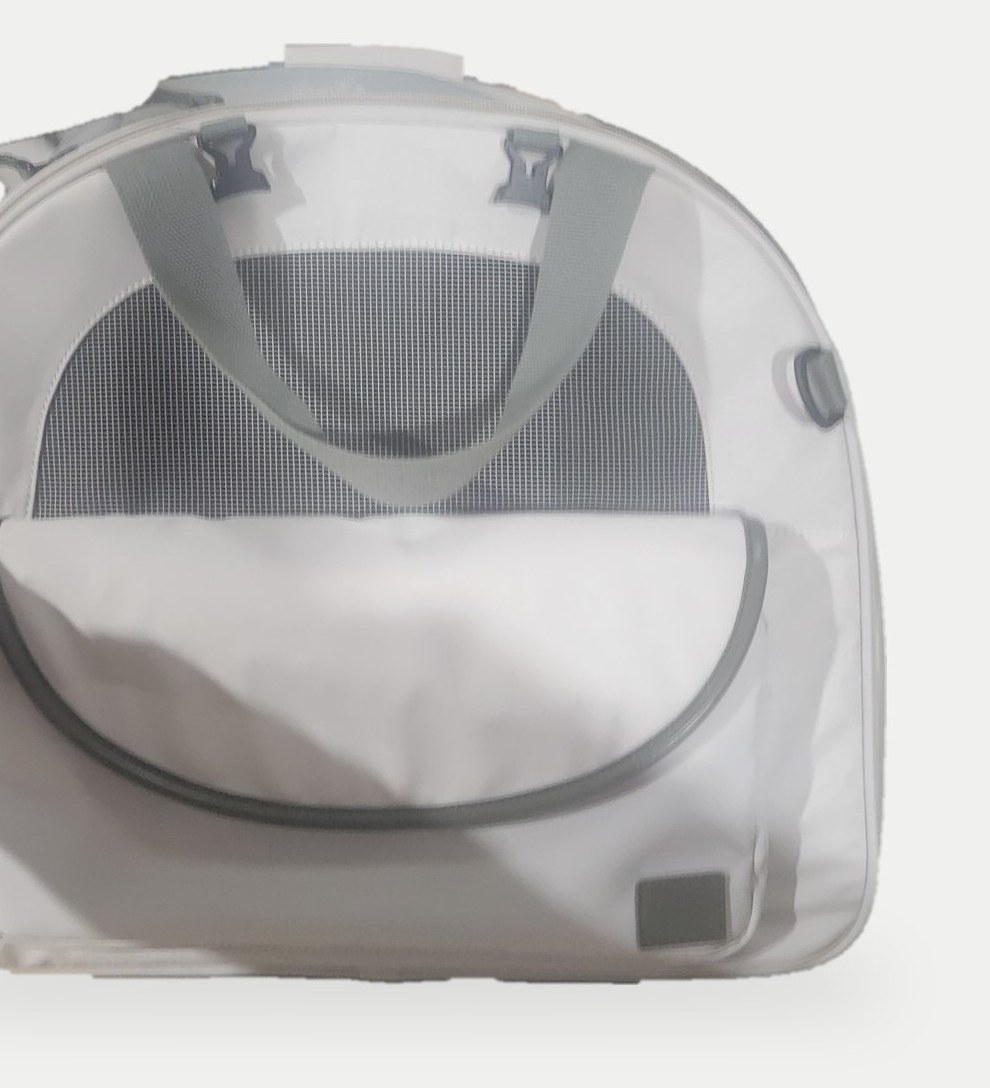
1. Start from the pet, not from the bag
Write down the pet the carrier is designed for: species, weight range and body length from nose to base of tail. From that we work out the inner space. Give the inner L × W × H in millimetres if you have it; outer dimensions then follow from padding, frame and binding thickness. If you sell into a market where cabin-bag size matters, send the size limit you target. We build to your dimensions; airline acceptance is decided by each airline, so it should not be promised on the product.
| Item | What to specify | Why it matters |
|---|---|---|
| Pet range | Species, weight range, body length | Sets the inner space and the load the straps and base carry |
| Inner size | L × W × H in mm, measured inside the lining | Outer size changes with foam and binding; inner size is what the pet feels |
| Shape | Upright backpack, rounded shell or box shape; expandable section or not | Changes pattern, frame and how the bag stands when set down |
| Carry modes | Backpack only, or also top handle / shoulder strap | Each mode needs its own reinforcement points |
2. Ventilation: mesh panels, windows and covers
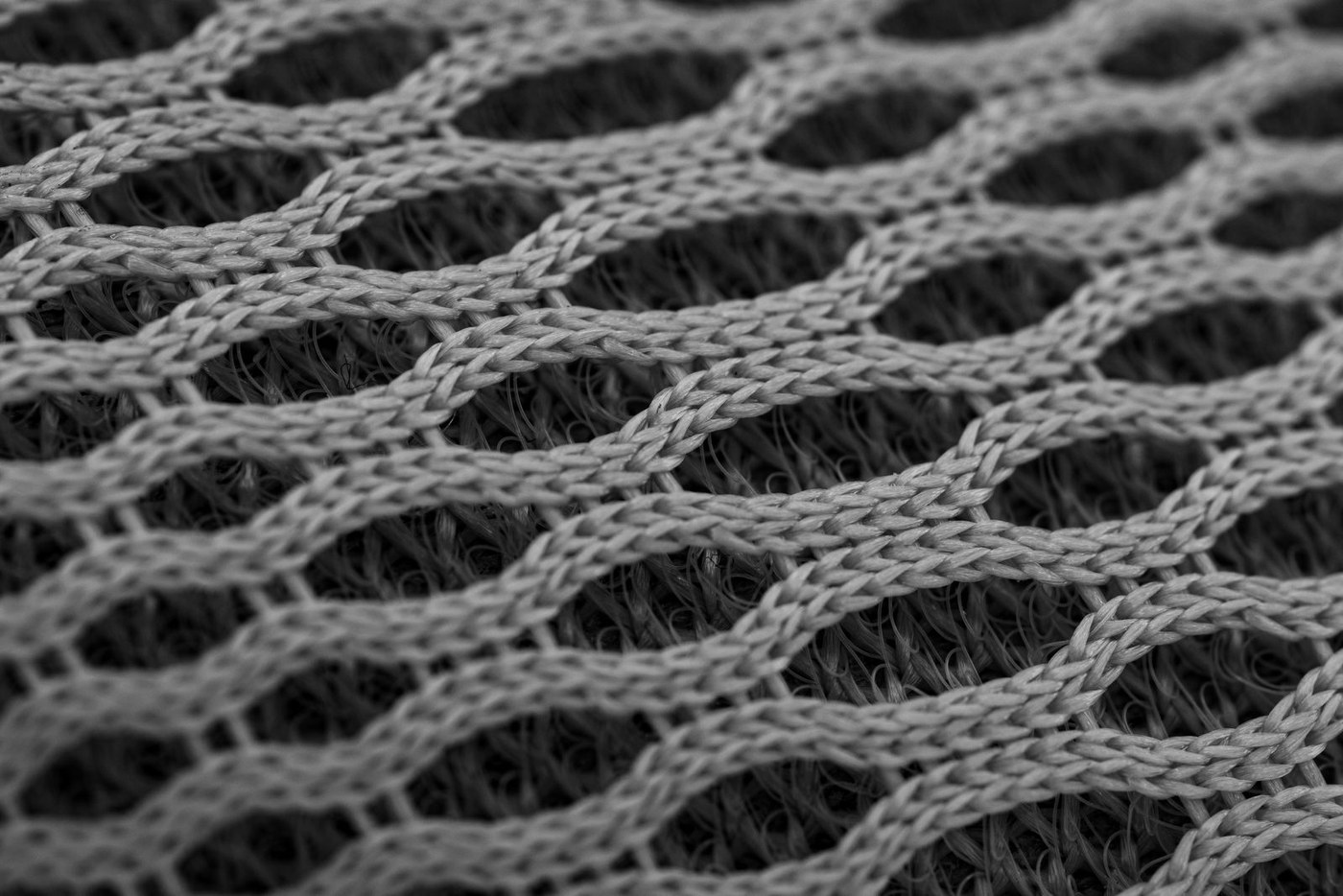
Most carriers combine mesh on two or three sides with a front opening. Specify which panels are mesh, the mesh type (soft polyester mesh, tougher coated mesh) and whether each mesh panel has a cover that rolls up, zips or folds down. A window in clear material is a styling choice; if you want one, say whether it is flat or domed and how it is joined to the fabric, because that decides the construction.
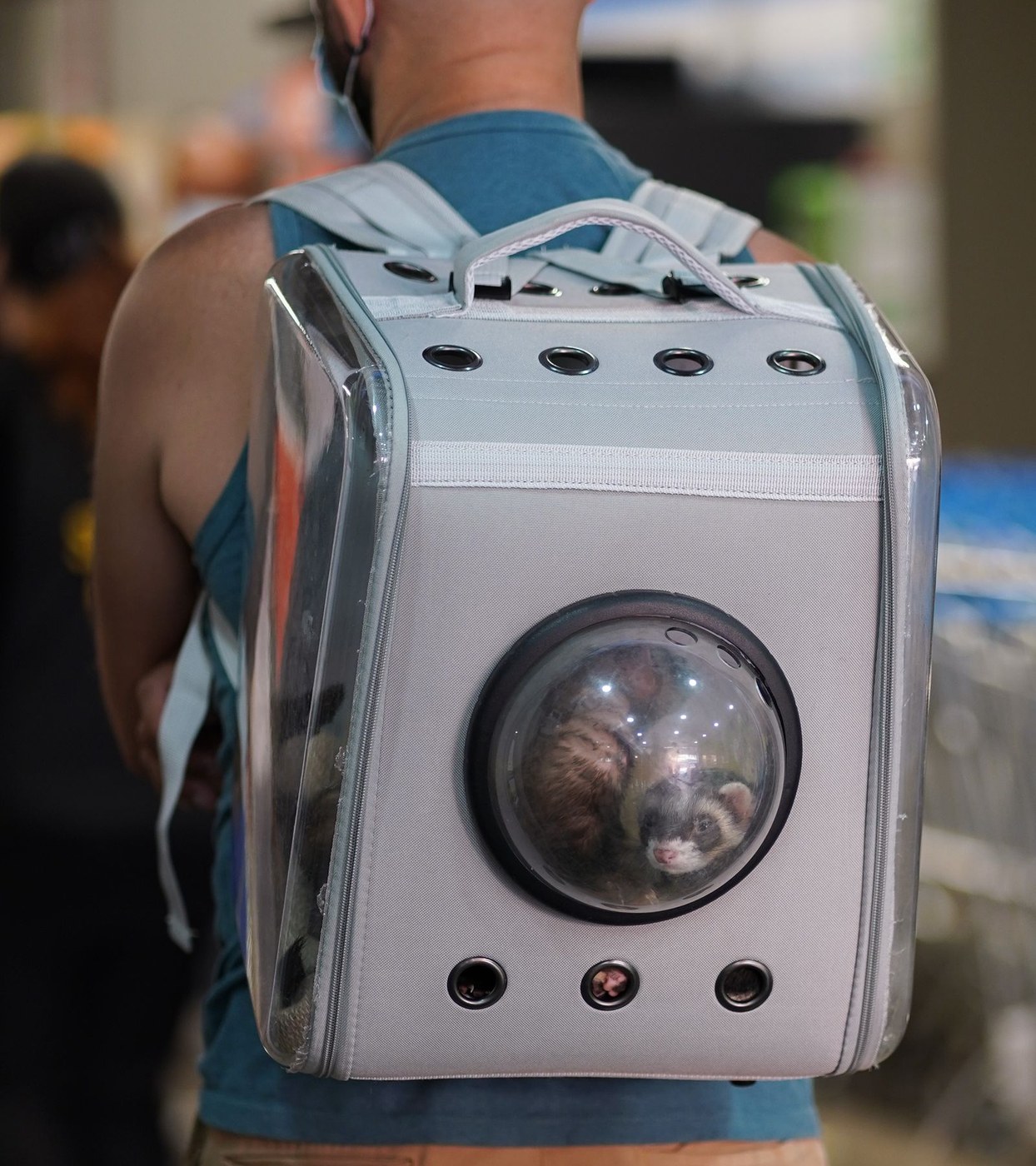
- Mesh placement: sides for cross-flow, front for the pet to look out, top for extra air.
- Covers: privacy flaps calm some pets; decide roll-up with toggles or zip-down covers.
- Edges: mesh is bound or turned and stitched so pets cannot chew a raw edge.
- Air holes: if you want small vents in solid panels, mark where; they are reinforced with eyelets or stitched rings.
3. Base, frame and padding
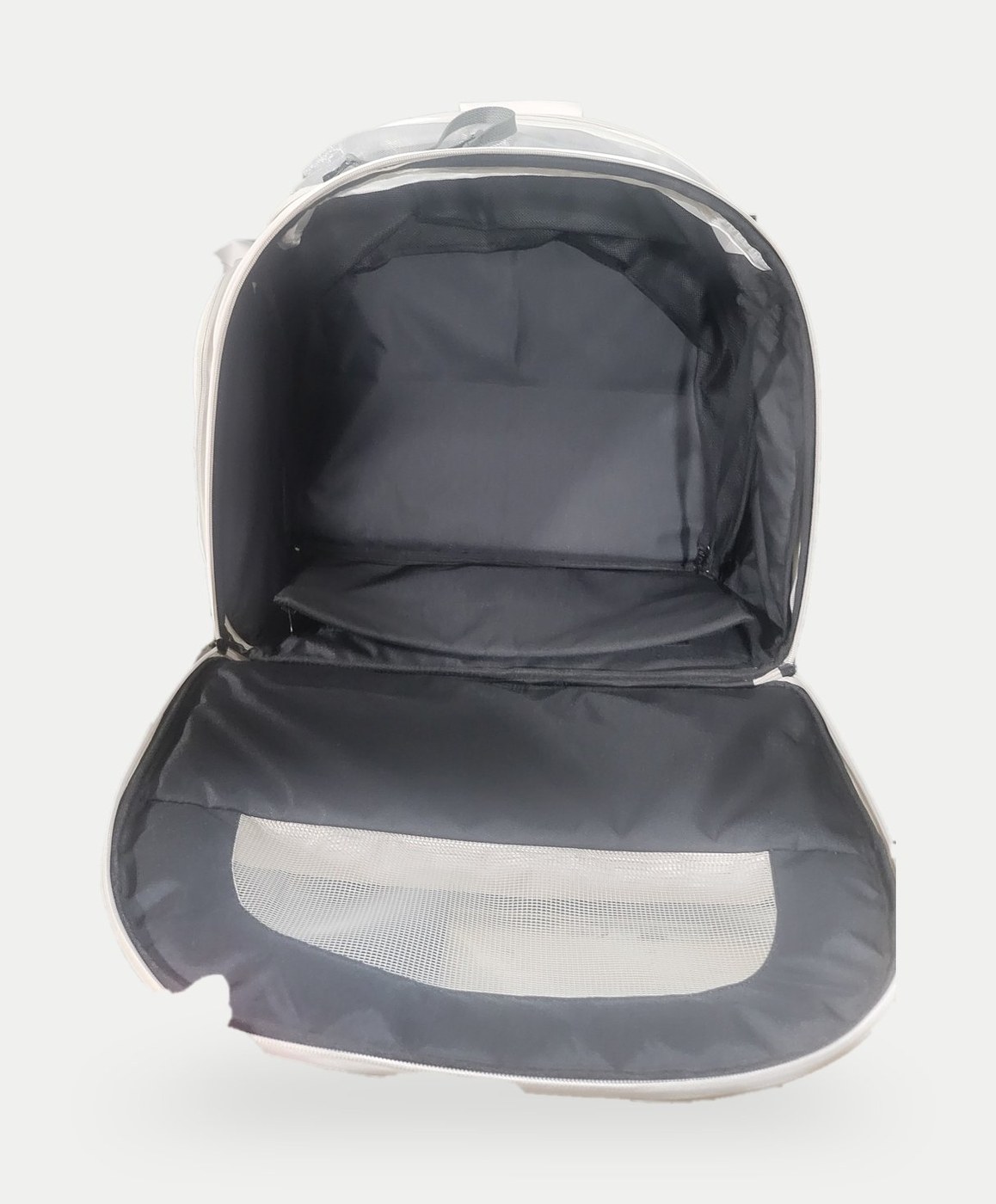
The base carries the weight. A removable pad over a stiff board keeps the shape and lets the owner wash the pad. Specify the board or foam thickness you want, or let us propose it on the first sample. Side walls usually use thinner foam or a light board so the bag keeps its shape without getting heavy. Tell us how the bag should stand when set down: flat on its base, or leaning on its back.
4. Closures, safety leash and straps
| Part | Options to choose | Note for the brief |
|---|---|---|
| Main zip | Two-way zip around the front or top opening | Ask for lockable or clip-together pullers so a pet cannot nudge it open |
| Safety leash | Short internal leash with a clip, sewn into a reinforced seam | Mark its position; it should reach the collar without letting the pet climb out |
| Shoulder straps | Padded straps with mesh back panel, adjustable length | Specify padding thickness and the size range of wearers |
| Chest / hip strap | Chest strap, hip belt or both | Useful for heavier pets; adds load points to reinforce |
| Handle | Top grab handle, wrapped or padded | Reinforced through the top panel, not only the binding |
| Pockets | Side pockets for treats or bags, front zip pocket | Keep them clear of mesh vents |
5. Materials and finishing
Outer shells are usually nylon or polyester with a coating, sometimes with PU / synthetic leather trims. Linings should be smooth and easy to wipe. Name the colour, the outer fabric and lining you want, or send a swatch. Logo techniques such as woven label, rubber patch, embroidery or print are available through our upstream suppliers; decide the logo position for the first sample, because it can move seams. For a side-by-side look at shell materials, see PU / synthetic leather vs nylon vs polyester for bags.
6. From brief to sample to bulk
- Send what you have: a reference carrier, photos with a tape measure in view, or a tech pack. An incomplete tech pack is fine; we list the open points.
- Pattern and materials: we draft the pattern and propose mesh, board and closures for anything marked TBD.
- First sample: standard samples take 7–15 days; special customization such as new moulds or special fabrics is timed separately.
- Review with a pet: check entry, turning space, airflow, leash reach and strap comfort; send marked-up photos.
- Approved sample = bulk standard: bulk is inspected against the approved sample with basic testing; third-party lab reports can be arranged on request.
For how to review a sample step by step, read how to review and approve a functional sewn product sample; if you start from photos or drawings, see OEM development from your sample, photos or drawings.
Brief checklist
- Pet species, weight range, body length
- Inner L × W × H (mm) and target outer size limit, if any
- Mesh panels, mesh type, covers, any clear window
- Base pad, board/foam thickness, washable parts
- Zip type, lockable pullers, safety leash position
- Straps, chest/hip strap, handle, pockets
- Outer fabric, lining, colours, logo technique and position
- Reference photos or sample, and what to change from it
FAQ
Can you make a pet carrier backpack from our reference photos?
Yes, if the photos come with key dimensions. Send front, side, inside and detail photos with a tape measure in view; we draft the pattern and confirm the construction before cutting. The product is developed for your brand and other brands’ marks are not copied.
How long does a pet carrier backpack sample take?
Standard samples take 7–15 days once the brief is clear. Special customization, such as new moulds for a domed window or special fabrics, is timed separately.
Can the carrier be made to fit cabin-bag size limits?
We build to the outer dimensions you give us. Airline acceptance is decided by each airline, so we recommend you check the limits for your market and do not promise approval on the product.
Which parts help keep the pet inside?
Lockable or clip-together zip pullers, an internal safety leash sewn into a reinforced seam, and bound mesh edges. Mark their positions in the brief or let us propose them on the first sample.
How do you make sure bulk matches the approved sample?
The approved sample is the bulk standard. Bulk is inspected against it with basic testing, and third-party lab test reports can be arranged on request.
Next step: send your reference
Email info@dinleey.com with reference photos or a sketch, the pet size range and the inner dimensions you know. If you have a physical sample, tell us and we will reply with how to send it. You can also use the contact and quote form or WhatsApp. Common questions are answered in the OEM sourcing FAQ.